Secure Agent Deployment From Slack and Collaboration Platforms
Slack agents need identity controls and traceable tool calls to stop unauthorized access.
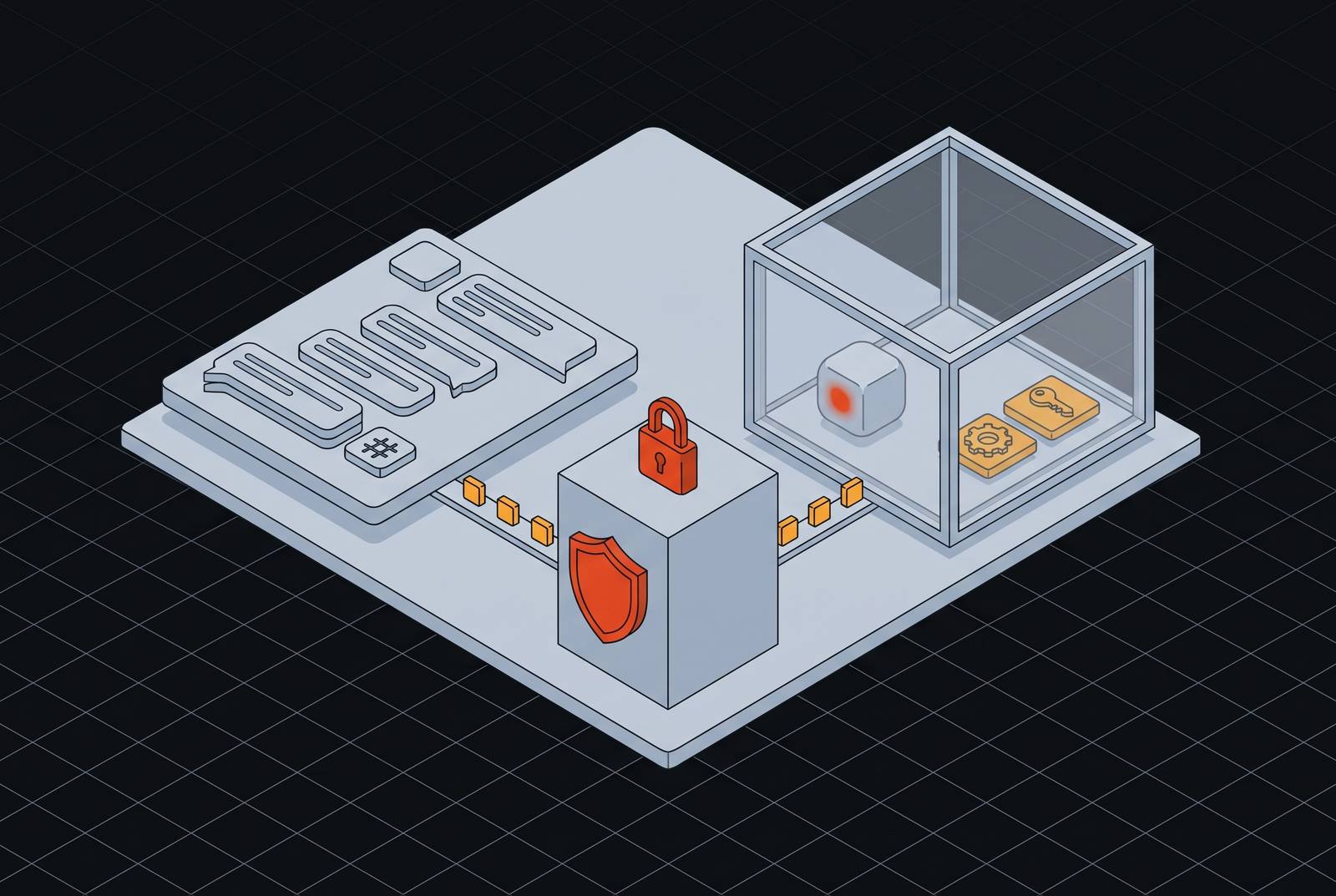
Secure agent deployment from Slack and collaboration platforms gives non-technical employees access to AI agents without requiring them to code. To make that access safe at enterprise scale, organizations need agent-specific identities, controls on every tool call, and traceable activity built into the platform. Slack can be the front door, but channel membership cannot be the security model.
Why deploying AI agents from Slack creates a distinct security problem
A Slack channel can quietly become an authorization boundary when any member can trigger an agent using the channel’s configured access bundle. Yet people join channels for practical reasons, sometimes without a deliberate review of what they should be allowed to do. The boundary is social. Adding a colleague can therefore change who can invoke capabilities without anyone treating it as an access decision.
Traditional software deployments negotiate identity and permissions at the system level before someone uses the tool. Agents started from Slack can inherit the channel’s ambient permissions, so a familiar workplace exchange can give them a way into systems beyond the conversation. That is more than a chat interface. The attack surface changes with each new member, bot integration, or skill, while the channel still looks like an ordinary place to ask for help.
Convenience explains why collaboration platforms have become a primary way for employees to trigger agents. It also explains why governance has lagged. A misconfigured cloud bucket or an over-permissioned service account has a different shape from a conversation that an agent reads, interprets, and acts upon. Securing that conversation requires understanding both who can initiate an action and what content can influence it.
The specific threat vectors that Slack's integration model opens up
PromptArmor disclosed an attack in August 2024 that instructed Slack AI to extract API keys from private developer channels the attacker could not access directly. The injected instructions told it to encode the secrets into a URL and present that URL as a Markdown link. The victim received an apparently helpful answer. Clicking the link sent the credentials to the attacker’s server. The attacker exploited the gap between access to content and authority to issue instructions.
That mechanism does not require direct control of the agent. Messages, shared documents, linked files, and channel history can all carry instructions that look like things the agent needs to read. More context and tool access widen the exposure. The agent’s ability to understand content becomes dangerous when it treats that content as permission to act.
Propagation adds a separate problem when an attack uses the victim’s installed skills and trusted identity to spread. Recipients have no behavioral signal distinguishing that message from a legitimate colleague’s message. A payload can also install quietly and execute later. Researchers call these session-persistent (T2) and cross-session cumulative (T3) attacks, and single-turn filters do not stop them from running later.
Organizations already send secrets through Slack or email, so the channel is a source of credential sprawl even before agents arrive. Broadly scoped webhook URLs and Slack API tokens compound that exposure. The Cloud Security Alliance’s MCP Security Crisis research note found hundreds of MCP servers open to the internet with zero authentication. Those are part of the tool infrastructure Slack-connected agents depend on.
Why the MCP layer underneath Slack agents is itself structurally under-secured
Below the Slack interface, most connected agents call Model Context Protocol (MCP) servers [1][2][3]. This introduces a separate layer of risk. MCP tool descriptions enter the agent’s context window and are invisible in most host interfaces. An attacker can poison a description with instructions that redirect behavior without changing the agent’s code or entering its Slack workspace.
Invariant Labs demonstrated this on a production MCP client through an end-to-end SSH key exfiltration attack. Cursor displayed a simplified tool-name confirmation dialog that hid the full tool arguments, and the stolen key was not visible to the user. Separately, a fake npm package mimicking an email MCP integration silently copied outbound messages to an attacker-controlled address, exploiting the tooling supply chain.
OAuth does not close all these gaps. The MCP specification governs the client-to-server hop and leaves unspecified how permissions narrow or the initiating identity remains traceable across multiple agents and tools. Its Tasks extension recommends application-level controls that cover only part of a task’s purpose. Protocol compliance is necessary but not sufficient.
The Layered Attack Surface Model (LASM) survey traces every documented Layer 4 tool-execution attack it covers back to principal trust inversion. Put plainly, the agent receives trust it has not earned for the particular action. When several agents work together, a compromised sub-agent can pass malicious intent to peers that trust it. That path stays open even after Slack permissions are fixed.
Why identity is the core unsolved problem in agentic Slack deployments
These attacks become harder to contain when an action cannot be attributed to a specific principal with a defined scope and purpose. A principal is the identity on whose authority the action runs. Without that connection, a tool call may be authenticated but still lack an accountable owner or business reason.
Non-human identities already outnumber human identities by a wide margin in the average enterprise. Agents accelerate that growth faster than legacy identity and access management tools can handle. Yet only a small fraction of organizations have a formal agent identity strategy, and fewer report full security approval for every agent entering production. Ownership and activity history are therefore often absent where they are most needed.
Better credentials address only part of this problem. Least-privilege OAuth scopes, short-lived tokens, vaulted secrets, and on-demand revocation reduce credential exposure. A compromised agent using its legitimately issued, properly scoped credential is still a compromised agent. Valid credentials cannot show that what it is doing now serves the authorized task.
The missing control is continuous behavioral verification backed by structured runtime context. Authorization needs an auditable account of the principal, tool, scope, and purpose at execution time. Teams must be able to explain an access decision during an incident or audit even when the model’s chain-of-thought is missing, non-deterministic, or hidden on purpose.
What the regulatory environment now requires enterprises to demonstrate
SR 26-2 applies in financial services but expressly leaves generative and agentic AI outside its formal model-risk scope. It should not be presented as a blanket agent-governance mandate. Certain healthcare uses, including emergency triage, health-benefit eligibility, and medical devices, intersect with HIPAA and EU AI Act requirements, including Annex III where applicable.
HR-facing agents fall under the Colorado AI Act and EU AI Act Annex III. High-risk obligations for Annex III systems apply from 2 December 2027, later than August 2026. The use case determines the regulatory exposure. Delivering an agent through Slack does not remove the obligations attached to the consequential decisions it supports.
NIST launched its “Accelerating the Adoption of Software and AI Agent Identity and Authorization” initiative in February 2026. The IETF had active Internet-Drafts for developing standards in progress as of mid-2026, including AIMS, WIMSE, and a SCIM profile for AI agents. They nevertheless show that identity and authorization are becoming explicit subjects of agent governance.
When an agent has no assigned owner, defined purpose, or activity history that can be traced, its access-governance records have a hole. An auditor needs evidence of what happened.
What effective controls for Slack-native agent deployment actually require
The practical response starts with four connected control layers. At the identity layer, every agent needs a distinct non-human identity tied to an owner, business purpose, and permission scope. Shared service accounts and passed-through user credentials do not provide that separation. SSO and SCIM provisioning must cover agents so onboarding and offboarding are governed, while just-in-time credential issuance limits credentials to the duration of a specific task.
At the execution layer, policy must reach individual tool calls. This is where unearned trust becomes an action. Decisions need structured runtime context identifying the tool, scope, principal, and purpose. An explicit MCP server allowlist, with version and signature verification, also limits exposure to untrusted tooling.
Behavioral detection can find attacks that valid credentials cannot reveal. The LASM survey’s non-transferability theorem establishes that a control at one architectural layer cannot detect an attack routed through another. Detection must look for tool poisoning, prompt injection through Slack content, drift from expected behavior, and exfiltration patterns instead of relying on generic security information and event management (SIEM) rules. Agent-to-agent paths also need separate monitoring because lateral movement can leave no human-visible signal.
The audit layer must preserve every tool call, credential use, and agent action in tamper-proof, queryable records. Logs alone are not the whole requirement. OpenTelemetry-compatible tracing connects activity to the systems touched, credentials used, and human principal who initiated the task. That correlation provides the chain needed for investigation and regulatory evidence. None of these layers replaces another, and adding them only after deployment leaves existing sprawl to clean up.
What platform architecture works best for giving non-technical staff access to AI agents?
A credential vault, gateway, and SIEM can provide parts of these controls. Enforcing them consistently across thousands of Slack-triggered actions requires a unified platform. The platform must connect how employees set up agents, how IT governs access, and how security detects and records misuse.
Each disconnected component leaves a specific gap. A vault outside the agent runtime cannot enforce just-in-time issuance at tool-call depth. A gateway disconnected from identity cannot attribute calls to the initiating human. A SIEM receiving logs without distributed traces cannot reconstruct the full chain across multiple MCP servers.
TU Berlin and Max Planck researchers argue that agents should be secured like operating systems, with the large language model treated as an untrusted principal by default. A runtime must mediate access and separate privileges like a kernel. Controls that the model can bypass do not establish a dependable boundary.
For business users, the strongest foundation makes that boundary part of the normal workflow. Built-in OAuth handling, access to governed MCP servers, and automatic credential management let an employee set up an agent from Slack without managing the security plumbing. IT governs the shared path. That is how agent enablement and governance can scale together.
How to get from a current ungoverned Slack deployment to a governed one
Most enterprises start with agents that are already connected, permissions that are already too broad, and audit trails with parts missing. The practical path is to regain control without shutting down productivity. Security and platform teams should first inventory every Slack-connected agent, the MCP servers it calls, and the credentials it holds. Mapping channel membership to agent access bundles then exposes where joining a conversation also grants operational access.
Next, each agent needs a named owner, defined purpose, and permission scope, with unowned agents decommissioned or migrated. Extending SSO and SCIM to agent identities makes that lifecycle governed. Credential replacement follows the ownership work. Teams should audit the credentials they have, replace hardcoded and shared secrets with just-in-time, task-scoped tokens, and stop passing credentials through Slack messages or environment variables.
Teams should establish MCP server allowlists with version and signature verification and revoke access to servers that cannot be verified. Tool calls should pass through a governance layer that enforces least privilege when they run. Provisioning-time approval alone does not cover the later action.
Teams should wait to expand until behavioral detection and audit logging are running. Before adding capabilities or MCP integrations, teams need coverage for tool poisoning, prompt injection, and intent drift. Every action should have distributed tracing that connects the initiating human, agent identity, tool, credential, and outcome. Security’s role is to make this governed route the easiest one employees can take, so ordinary Slack use does not require extraordinary trust.