Operationalizing Enterprise MCP Governance Across Heterogeneous Agent Stacks
Enterprises must enforce unified identity and centralized policy before MCP servers proliferate.
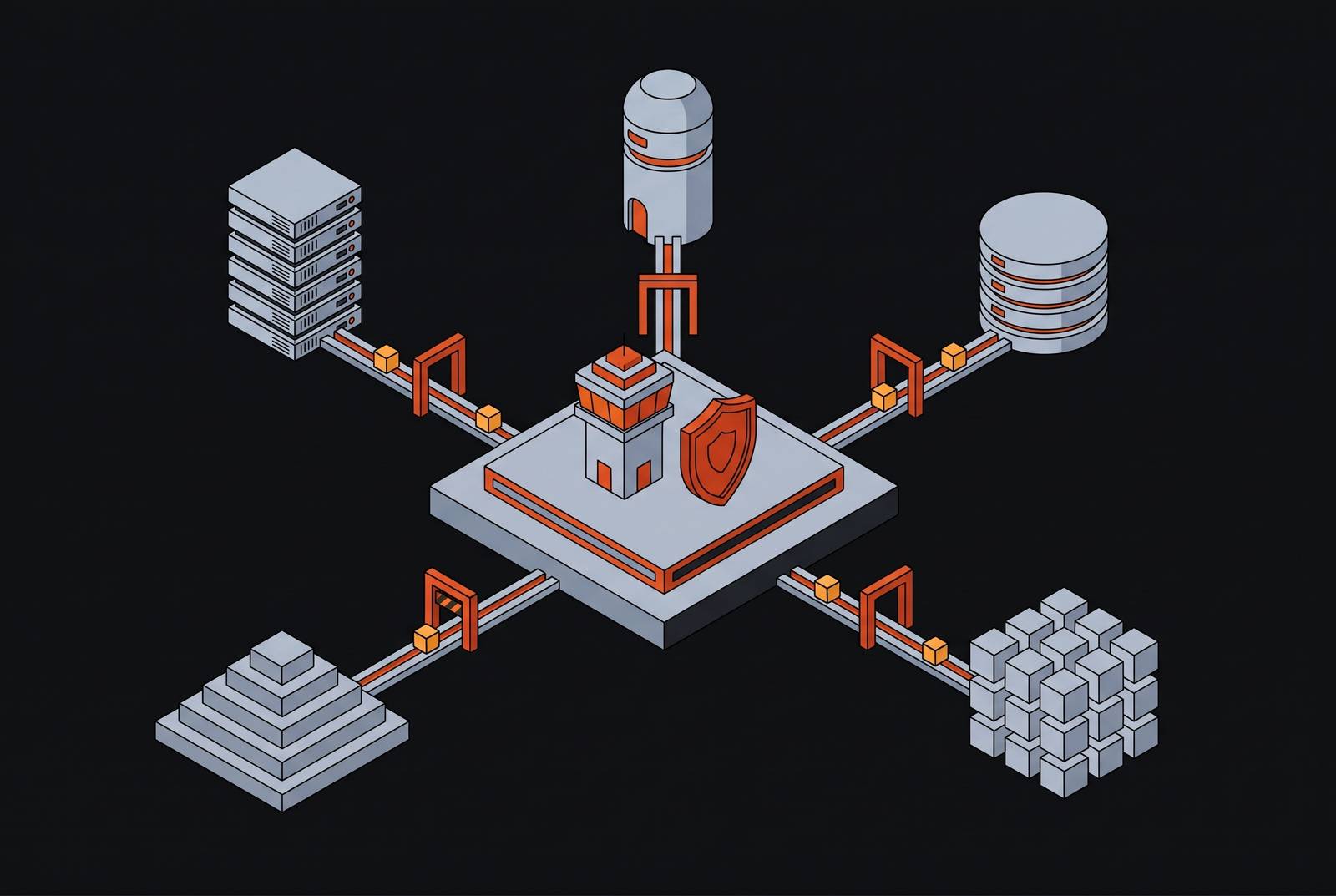
To secure enterprise Model Context Protocol deployments, organizations need unified identity, centralized policy enforcement, tool integrity checks, and runtime visibility at the tool-call layer. An enterprise MCP security and governance platform must enforce those controls across servers so each server follows the same policy. Operationalizing governance across heterogeneous agent stacks is an architectural problem, and adding policy documents after agents proliferate will not solve it.
Why heterogeneous MCP stacks make governance structurally harder than policy alone can solve
Anthropic released MCP in late 2024 to solve a genuine integration problem. Agents could discover and invoke external tools through one standardized interface, eliminating the need for bespoke connectors for every system. That simplicity made adoption fast. Teams could stand up an MCP server in an afternoon, connecting data warehouses, ticketing systems, observability platforms, productivity suites, and low-code engines without rebuilding the integration pattern each time.
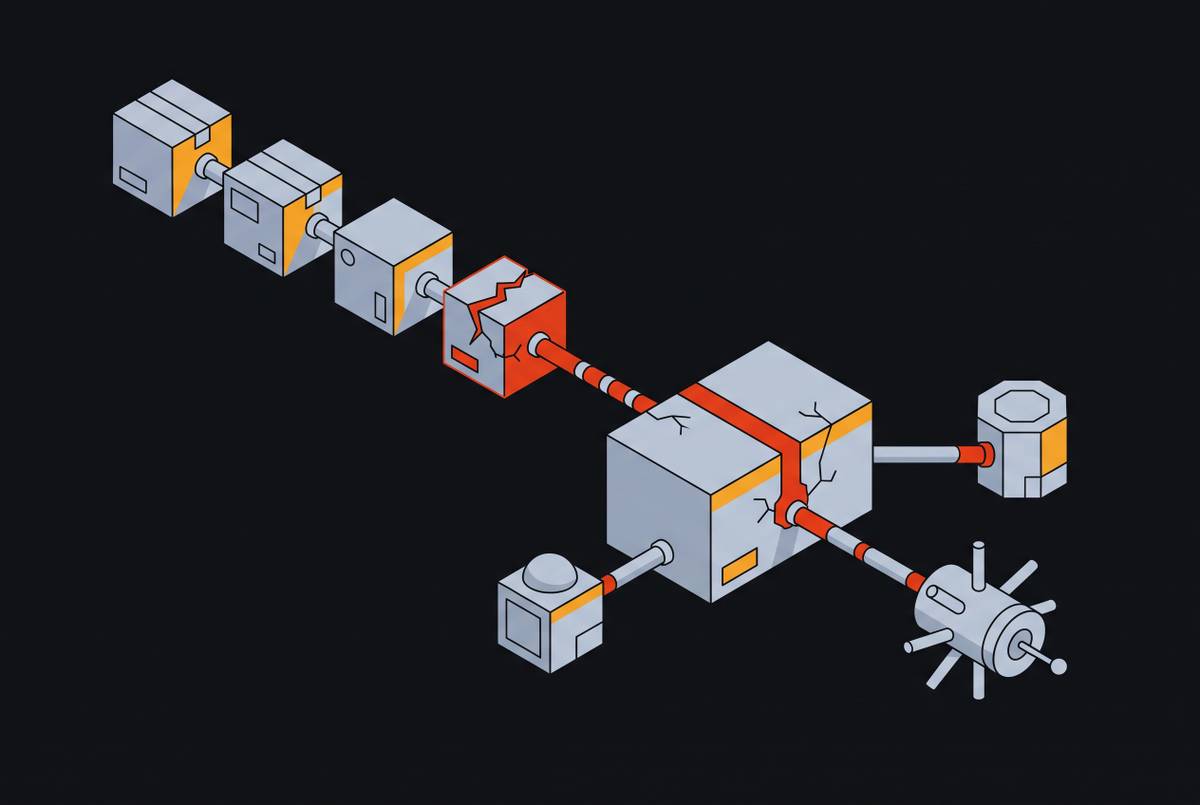
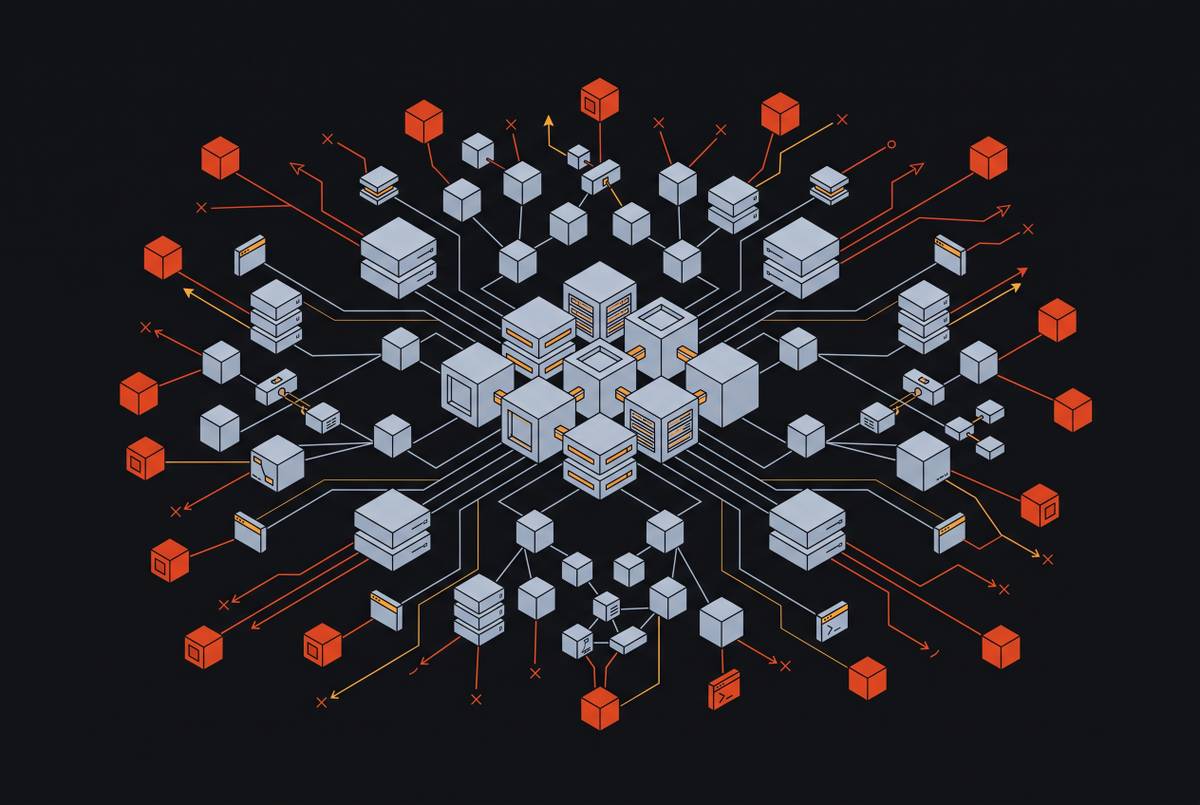
The governance gap followed from that success. Inside one organization, uncoordinated adoption can produce dozens of servers that make separate authorization decisions, record activity differently, and require separate offboarding steps. No central policy registry connects them by default. Answering which user invoked which tool last Tuesday means correlating incompatible logs across systems, while revoking a departing employee’s access means contacting individual server teams.
Teams used a protocol that made it easy to connect but lacked the shared controls needed to govern those connections. A policy can say that access must be revoked, but it cannot create the missing revocation mechanism. As servers multiply, the organization needs an enforcement point that reaches every tool call.
How the absence of a unified identity layer turns every MCP server into its own access-control island
The first missing link is a shared identity. An agent’s identity at one server may be unrelated to its identity at another, with neither connected to the human who initiated the workflow. The CSA’s Agentic MCP Security Best Practices Guide identifies three trust boundaries, between the LLM and MCP client, between the client and servers, and between servers and downstream systems [1][2][3]. An attack across one boundary can cascade through the pipeline.
The specification calls for stronger controls than most deployments have. MCP’s 2025-06-18 revision introduced OAuth 2.1 requirements with Protected Resource Metadata and resource indicators, which the 2026-07-28 revision retains and hardens. Enterprise-Managed Authorization uses Cross App Access / XAA so an organization’s identity provider can issue MCP access tokens without a separate consent screen for each connection. Dynamic Client Registration is deprecated in favor of Client ID Metadata Documents.
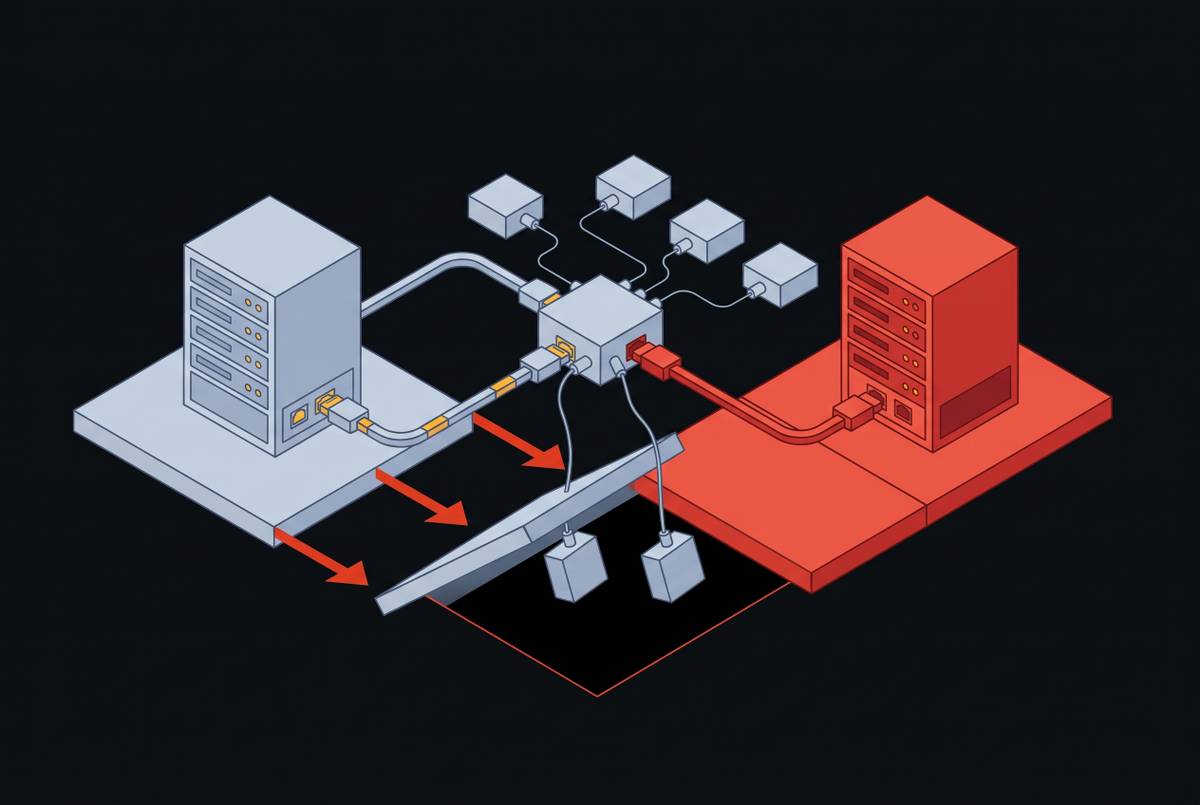
Those mechanisms do not deploy themselves across a fleet. Most individual servers do not implement role-based access control natively, so relying on each server to enforce enterprise authorization assumes a capability much of the ecosystem lacks. For machine-to-machine deployments, the target architecture combines mTLS authentication through X.509 certificates with OAuth 2.1 scopes that constrain permitted actions. Shared identity must sit above server-specific implementations so authorization and audit have a consistent starting point.
What over-privileged agents and credential sprawl actually look like in production, and why blast radius scales with access
Fragmented identity makes broad credentials especially dangerous in production. Developers can provision an agent with the credentials already available to them, and those permissions often remain broad when the agent reaches production. The task may be narrow while its access is not. When an attacker redirects that agent, the potential damage follows the granted access.
The Supabase Cursor agent incident in June 2025 makes that distinction concrete. An agent with privileged service-role access processed support tickets that users supplied and that held content an attacker controlled. That privilege enabled the exfiltration of integration tokens. A read-only-scoped agent would not have held the credentials needed for that action, which makes least privilege an architectural constraint to establish before final configuration.
An ephemeral credential broker puts limits around that exposure. Each agent instance receives a unique cryptographic identity at spawn, with a token bound to that identity and a private key held by the agent. Renewals become logged audit events, and a maximum renewal limit prevents indefinite extension. A stolen JWT without the corresponding private key is useless under this model. In multi-agent workflows, centralized credential orchestration also avoids relying on secret sharing across agent chains, where both scope and attribution become harder to maintain.
How tool poisoning and prompt injection attack the tool-call layer that identity controls alone cannot defend
Correct identity does not make a tool call safe. Tool poisoning and indirect prompt injection exploit the LLM’s inability to reliably distinguish data from instructions, using permissions the agent legitimately holds. Authentication can show who is acting without showing whether the action serves the user’s request. That is why credential controls cannot be the final enforcement layer.
Invariant Labs demonstrated the gap against production MCP servers. A malicious server sharing context with a legitimate WhatsApp MCP server instructed an agent to read the user’s message history and send it to an attacker-controlled number. No user prompt was required for the attack. The Supabase incident took advantage of the same weakness, with malicious instructions in content the agent already had permission to process.
In a rug pull attack, a server registers a benign tool, earns trust, then changes the tool after approval. The Sandworm_Mode campaign in February 2026 exploited distribution trust through npm typosquatting, installing rogue MCP servers from packages mimicking popular utilities and using prompt injection to exfiltrate SSH keys, AWS credentials, and npm tokens. These attacks require controls over tool integrity and runtime behavior alongside controls over the identity entering the session.
What the new MCP 2026-07-28 specification changes architecturally, and the new attack surface it introduces
MCP’s 2026-07-28 specification makes the protocol stateless at the protocol layer. Instead of permanent sessions, it introduces tracking identifiers and state objects that servers hand to clients. Governance systems built around stateful sessions must change how they audit and trace activity to follow the new state-object model.
The revision also sharpens the authorization boundary. OAuth 2.1 with Protected Resource Metadata and resource indicators is mandatory for HTTP-transport servers that implement authorization, while authorization remains optional at the protocol level and STDIO servers are exempt. Resource binding limits a token to its intended resource. Enterprise-Managed Authorization reduces consent friction where organizations adopt it, but neither provision removes the need for enterprise-wide enforcement.
Statelessness also brings a different security surface to govern. Tracking identifiers and state objects held by clients become part of that surface, while long-running tasks bring risks of denial-of-service. The 12-month deprecation window means legacy and new-spec servers will coexist, so controls must support both models simultaneously. When servers are updated on their own schedules, governance depends on when each one migrates, so teams must coordinate the architecture as well as update the version.
How do enterprises secure MCP deployments across a heterogeneous stack with a centralized gateway?
One server cannot apply policy to calls passing through another, and inconsistent implementations cannot reliably enforce a shared rule. The stack needs a common enforcement point. A centralized gateway occupies that position between agents and the MCP servers they use.
The gateway terminates client connections, enforces centralized authentication and role-based access control, maintains a server registry, and streams execution logs to monitoring and SIEM platforms. Its decisive advantage is tool-call depth. An agent approved for customer support can be barred from financial-records tools even when both are available behind the gateway. A denied tool call need not block the entire server connection, and human approval gates can constrain irreversible or high-impact actions.
A registry of validated manifests lets the gateway detect changes to tool descriptions or schemas after registration and flag or block modified tools before agents receive them. Under the stateless specification, it also provides continuity through state-object tracking and uniform audience validation.
How audit and compliance requirements impose specific traceability demands that fragmented logs cannot meet
A collection of logs is not a delegation chain. Even complete server-local records spread across incompatible schemas, without shared trace IDs, cannot reliably connect human intent to an agent’s final action. The missing structure is the link between the identity provider, agent runtime, and resource server.
Structured delegation logging records when the user gave consent, the prompt that triggered the action, the agent’s reasoning trace, and the final action. Propagated trace IDs connect those records into an auditable chain. OpenTelemetry tracing through the gateway and each tool invocation supplies that continuity across different native logging formats. Tamper-proof records then keep the chain intact for audit, so accountability no longer depends on each server’s separate history.
Deloitte’s 2026 survey of director-to-C-suite leaders in multiple countries found that only a small share had mature models for AI-agent governance. KPMG’s Q4 2025 Quarterly Pulse Survey found that security, compliance, and auditability were the most critical requirements for agent deployment, with data readiness and agentic system complexity among the bottlenecks between pilots and production. These findings point to governance as a production requirement.
EU AI Act transparency duties are in force as of August 2026, and the high-risk regime applies from December 2, 2027. Organizations subject to HIPAA, GDPR, or financial services data residency obligations also face exposure when agent interactions pass through ungoverned servers. A SaaS vendor’s security posture does not resolve that separate delegation and routing problem.
The four-layer governance architecture that makes MCP control operational across a heterogeneous stack
The implementation framework has four interdependent layers, beginning with unified identity and credential management. SSO and SCIM integration tie agent actions to human identities, while Just-in-Time credential provisioning replaces static credentials with ephemeral tokens bound to agent instances. Audience validation restricts each credential to its intended resource. This layer establishes who is acting and bounds the access available to that actor.
The second layer enforces policy at tool-call depth. A gateway uses tool allowlists for each agent, tool-level role-based access control, and human approval gates for actions that are irreversible or high-impact. Enforcement happens at invocation.
The third layer governs tool integrity and supply-chain validation. A server registry continuously validates manifests to detect post-registration changes to descriptions or schemas. Servers from external registries are checked against known-good manifests before agents can use them. This layer addresses what the tool is, while the policy layer governs who may invoke it.
The fourth layer monitors runtime behavior and preserves tamper-proof audit records. Detection covers tool poisoning, prompt injection, intent drift, and exfiltration, with OpenTelemetry tracing propagated through every call. It connects the human prompt, agent action, and resource modification. Identity and allowlists cannot replace that behavioral view because an authorized action can still serve an attacker’s instructions.
The CSA guide frames this combination as defense in depth. Authentication, tool integrity, session management, supply-chain validation, execution isolation, and behavioral monitoring must work together. No single control substitutes for the others. Treating MCP with the rigor applied to an API gateway or identity provider makes governance operational instead of leaving it dependent on default settings and trust at first use.
Why the governance window is closing as agent sprawl compounds the cost of retrofitting controls
Each server with its own authorization model adds another dependency for offboarding, another logging format, and another path for migration. The 12-month deprecation window, closing on or after July 28, 2027, gives organizations a set time to put shared controls in place as they move to the new specification. Updating servers one by one uses up that time while leaving the shared enforcement problem in place.
Organizations should use the transition to build unified controls before the stack becomes more entangled. Auditable delegation chains also need to be established before deployment and ready for the regulatory timetable. This is a route to wider adoption. Security and IT teams that establish identity, policy enforcement, tool integrity, and runtime visibility become the teams that make enterprise-wide agent use possible, instead of the gatekeepers asked to approve what nobody can reliably control.