Threat Detection Capability Gaps When MCP Security Is Bolted Onto General-Purpose SIEM and EDR
Legacy SIEM and EDR miss MCP threats that hide in authorized agent behavior.
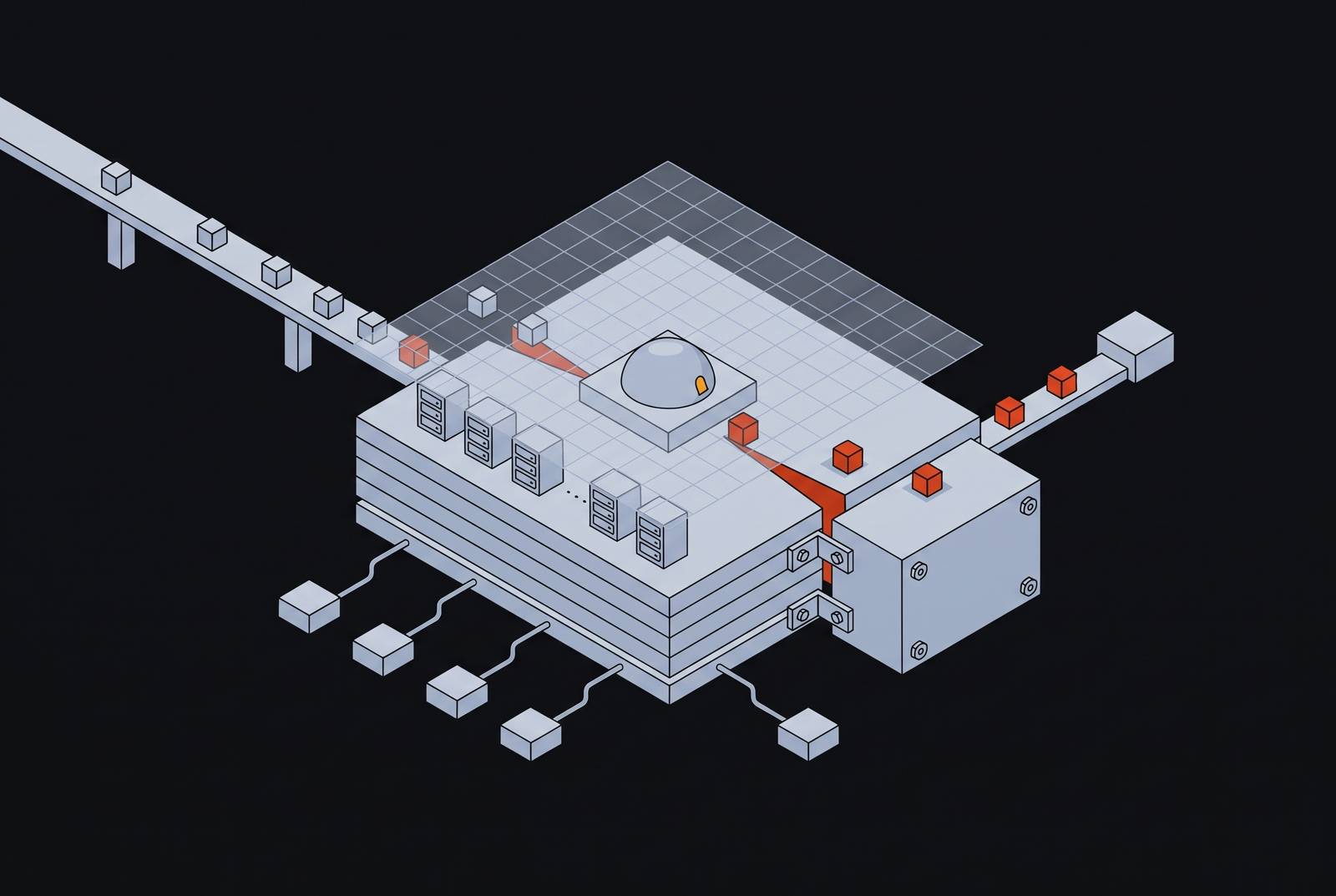
An enterprise MCP security and governance platform needs to check agent intent, enforce per-tool permissions, record each action, and watch for changes in tool supply chains. General-purpose SIEM and EDR cannot provide those controls merely by adding MCP connectors. Their design leaves them blind to authorized agents that follow malicious instructions, even when they can catch unauthorized access or known-bad code.
Why SIEM and EDR were built for a threat model that MCP breaks
SIEM and EDR were built around a practical detection model. They compare observed activity with known-bad signatures or a baseline of normal behavior for an identity. That model works when an outsider breaks in or a compromised credential acts outside its granted scope. The suspicious action departs from something the system already understands. A detection rule can name that departure without interpreting the purpose of a natural-language instruction.
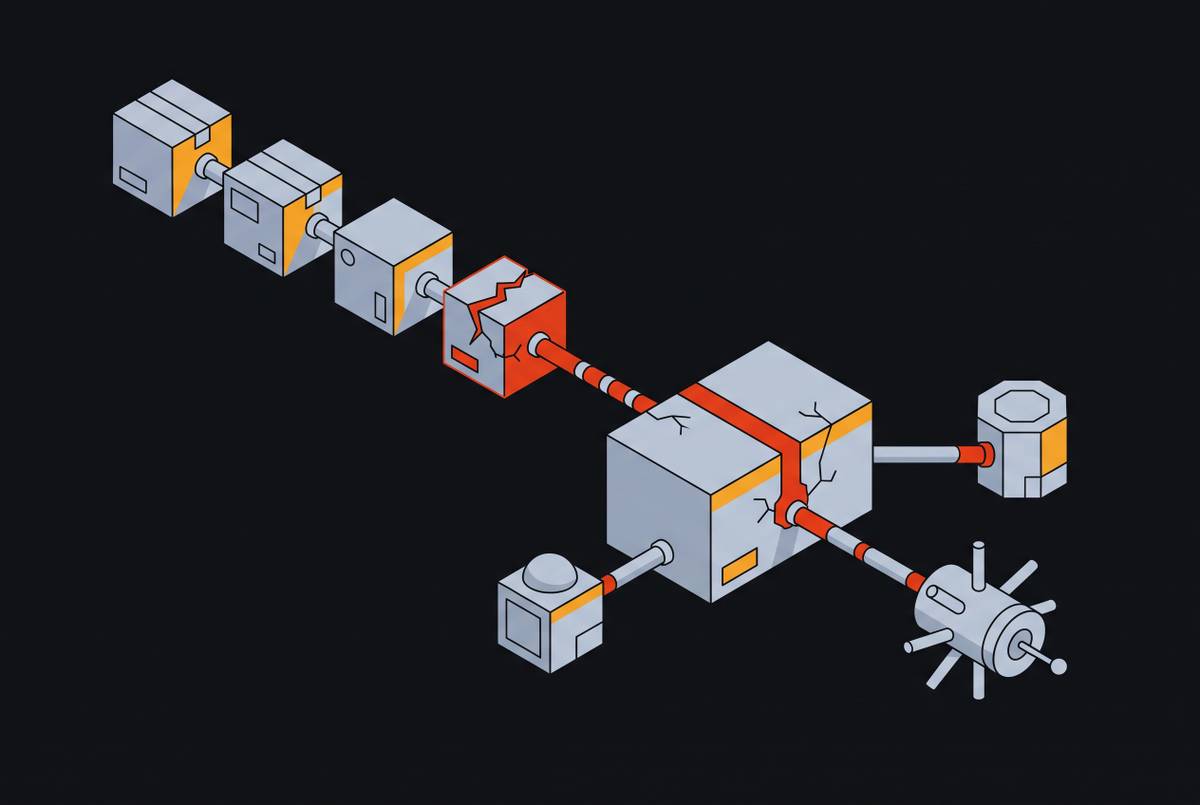
An AI agent authenticates legitimately, receives valid credentials, and invokes tools it is explicitly allowed to use. Yet poisoned instructions can turn what the agent is allowed to do toward a malicious goal. The access looks correct while the purpose is wrong. A rule that checks identity and tool access therefore answers a different question from whether the agent should perform this action for this task.
SentinelOne’s MCP security guide identifies the missing distinction. It states, “Traditional perimeter security fails against MCP attacks because they operate at the semantic level of natural language… These patterns bypass conventional identification entirely, requiring behavioral analysis and context-aware security controls.” Here, semantic means the meaning of an instruction in context. The detection model does not evaluate the thing being manipulated.
The MCP threat classes that live below the threshold of any log-based rule
Tool poisoning hides malicious instructions in a tool’s description or metadata, while the user sees a label that looks harmless. Invariant Labs demonstrated this in April 2025, showing how content presented as tool information can become instructions the model follows. Prompt injection takes advantage of the same boundary between content and authority. The agent trusts natural-language material as instructions to follow without checking it against its task.
Rug-pull attacks change a server or package after installation and trust are established. Straiker STAR Labs documented the SmartLoader / Oura Ring MCP clone, where the user experience supplied no warning and detection depended on registry monitoring and visibility into unexpected outbound connections. Trust at installation was not enough. Cross-session intent drift causes a similar problem with timing, because behavior changes between agent runs. A detector confined to a single session has no history against which to judge that change.
A network connection may expose a consequence of poisoned instructions, but a file hash or process tree does not explain why an otherwise permitted tool call is malicious. Current SIEM and EDR tooling also lacks fleet-scale fingerprinting of tool descriptions over days or weeks. The missing comparison is therefore both contextual and historical. It concerns what the agent was told, what changed, and how that changed its behavior.
How the authentication gap turns every authorized agent into an ambient threat
Authentication establishes who can connect. Once an agent authenticates to an MCP server, ambient authority can give it access across that server’s tools without per-tool authentication. The handshake looks correct even when the next action goes beyond what the task calls for. Successful login is not proof of correct authorization. Access-control tooling cannot resolve that distinction from the handshake alone.
The July 2026 MCP revision substantially hardens authentication through alignment with OAuth 2.1, but it only begins to address the broader permission problem. The OAuth profile requires client identity verification through Client ID Metadata Documents and PKCE. It does not define a standardized audit trail format. Verified identity alone leaves a gap in establishing or recording the right permission for each agent action.
Deployment practices widen that gap beyond the protocol’s stronger authentication path. A large share of servers in public registries still rely on static API keys, personal access tokens, or no authentication. Long-lived credentials and secrets hard-coded in configuration files leave more exposed, while over-broad tokens let an agent do more than it needs to. OWASP MCP01 identifies Token/Secret Exposure, and MCP02 identifies Privilege Escalation via Scope Creep. Both risks remain relevant after a connection succeeds, because the credential can be valid while its reach is excessive.
Why pattern-based scanning produces mostly noise and misses the real threats
The MCP Server Security Audit 2026 found that pattern-matching scanners had a 78% false-positive rate. Standard tool instructions were flagged as attacks while genuine semantic threats passed through undetected. The scanner has a discrimination problem: it finds suspicious wording but cannot reliably tell what it is doing there. Legitimate instructions and malicious manipulation can resemble one another when stripped of their task context.
That noise also weakens the human response. A security team flooded with false positives has less time to focus on real tool poisoning or prompt injection. The legitimate tool flagged next to a malicious one gives investigators little reason to trust either alert. Adding more matches can enlarge the review queue without supplying the missing distinction between an instruction the task requires and one that redirects it.
Does failure by purpose-built scanners mean MCP detection is unsolvable? No, but it does challenge the instrument being used. A scanner can be designed specifically for MCP and still rely on pattern rules that cannot interpret natural-language manipulation. Detection requires semantic context models. Rule tuning may change which alerts appear, but it does not help the scanner understand the context behind them.
What the 2026 CVE record shows about the blast radius SIEM never logged
OX Security’s April 2026 disclosure, “The Mother of All AI Supply Chains,” found a command-execution flaw across Anthropic’s official MCP SDKs for Python, TypeScript, Java, and Rust. The StdioServerParameters constructor passes unsanitized input to subprocess. Anthropic classified the behavior as intentional. The flaw exposes a separate but connected trust boundary, where MCP configuration can lead to host command execution.
Windsurf’s CVE-2026-30615 was High, with CVSS 8.0 and zero-click exploitation, while LiteLLM’s CVE-2026-30623 was Critical. Agent Zero’s CVE-2026-30624 was High, with CVSS 8.6. GPT Researcher’s CVE-2025-65720 and DocsGPT 0.15.0’s CVE-2026-26015 were Critical. Cato AI Labs disclosed the DuneSlide pair, CVE-2026-50548 and CVE-2026-50549, both with CVSS 9.8.
Configuration trust created exposure elsewhere as well. Amazon Q auto-loaded MCP configuration files from workspace directories without consent, an issue rated CVSS 8.5 and patched in June 2026. Check Point reported Claude Code’s separate hook-execution flaw, CVE-2025-59536, with CVSS 8.7, in February 2026. These are not all semantic attacks, and severity alone does not prove that monitoring failed. The detection concern is that, in several disclosed cases, existing monitoring did not catch the threat before public disclosure.
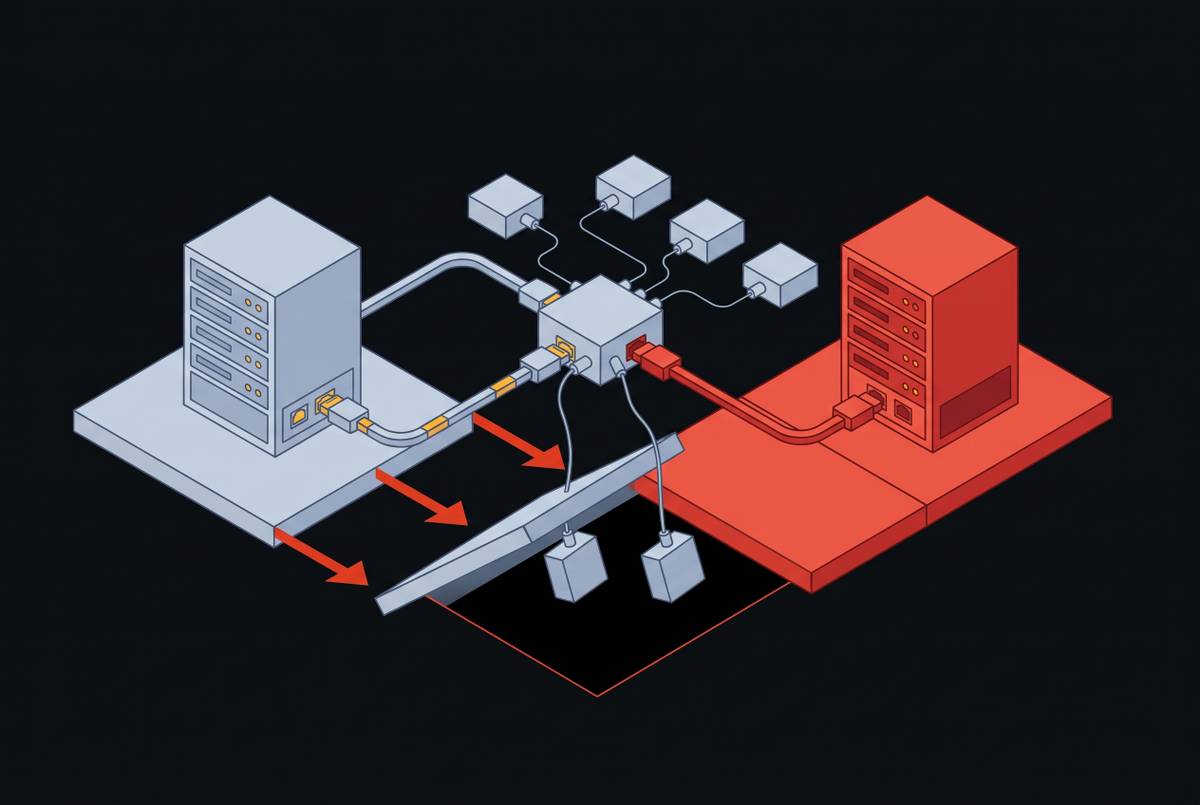
The first publicly documented malicious MCP server, postmark-mcp, makes the missing control concrete. It was pulling roughly 1,500 downloads a week before discovery. A package-content version-diff alert would have caught the change. Standard SIEM deployments do not apply that control to MCP package registries, leaving a supply-chain blind spot outside their ordinary monitoring scope.
The audit and telemetry void that makes post-incident investigation impossible
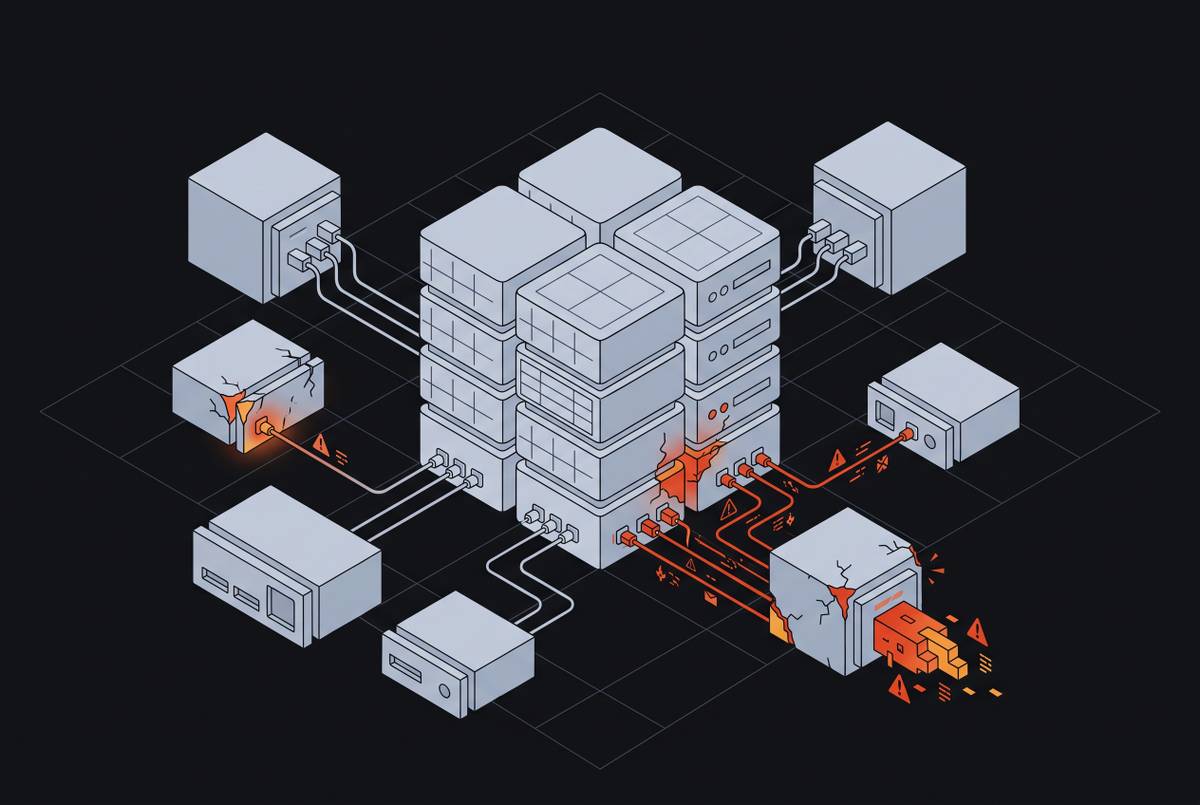
OWASP MCP Top 10 entry MCP08, Lack of Audit and Telemetry, identifies the evidence an investigation needs. For logs to be complete, they must record tool invocations, context changes, and user-agent interactions. Standard SIEM telemetry streams do not supply that record. Without it, investigators cannot establish what an agent did, when it acted, or whether a prompt injection fired. An access log can show that an agent got in without showing what it did next.
A complete agent audit record requires a unique agent identifier and version, the permissions delegated for that execution, and the specific tool or API invoked. It also needs the governance policy decision, whether permit or deny, and the reasoning step the agent generated before acting. No existing SIEM schema defines that full model natively. The absence breaks the chain between identity, authority, decision, and action. Recording only the final tool event cannot bring back missing context after an incident.
That forensic gap becomes a governance gap when an organization must demonstrate that its controls operated for every access attempt. To back a claim that unauthorized agent data access was prevented, an organization needs records that show what happened as well as a policy document. NIST launched its AI Agent Standards Initiative on February 17, 2026, following the NCCoE concept paper on agent identity and authorization on February 5, 2026. Singapore’s IMDA introduced its Model AI Governance Framework for Agentic AI on January 22, 2026, and the EU Digital Omnibus on AI took effect July 27, 2026. These developments ask more of audits of deployments that still lack the evidence they need.
Why bolting MCP connectors onto SIEM does not close the gap
OpenAI, LangSmith, and Datadog document telemetry that goes beyond prompts. Microsoft’s AI observability guidance describes concrete SIEM integration paths, and some model-governance platforms added runtime agent monitoring in 2025 and 2026. Richer records can make actions visible and support investigation.
Visibility, however, is not the same as reliable judgment about intent. A SIEM can receive every tool invocation and still lack a rule that distinguishes a legitimate dependency instruction from a hidden exfiltration command. Both can appear within a tool description used by an authorized agent. A connector transports the evidence but does not supply the semantic analysis required to interpret it.
Some deployments also lack the identity foundation for useful correlation. The NSA’s Artificial Intelligence Security Center flagged that many production MCP server implementations ship with no authentication controls in its May 20, 2026 Cybersecurity Information Sheet, “Model Context Protocol (MCP): Security Design Considerations for AI-Driven Automation.” Without authenticated identity, an alert cannot be anchored to a verified actor. More tuning cannot create that missing identity. Closing the gap requires controls in the MCP execution path as well as a destination for the resulting logs.
How do you secure MCP deployments across an enterprise AI stack?
Security and platform teams should check whether an enterprise MCP security and governance platform meets three linked requirements for purpose-built MCP security, which are semantic inspection, identity-anchored control and audit, and supply-chain monitoring. Semantic inspection must check tool descriptions and responses at runtime for prompt injection and tool poisoning. Context-aware models must judge manipulation in relation to the task.
Identity controls must reach each tool call. Every action needs a verified, unique agent identity and delegated permissions scoped to that execution. Just-in-time credential issuance and per-tool authorization address the ambient authority left by server-level access. SSO and SCIM integration connect agent identity to the enterprise identity graph, giving anomalies a subject.
Audit controls must preserve the evidence of that decision. Tamper-proof logs aligned to OTEL tracing standards should capture the agent identifier, version, delegated permissions, tool invoked, policy decision, and reasoning step before action. Those records support both incident response and regulatory audit. They also let investigators connect a suspicious instruction to the action and permission involved, rather than infer the sequence from incomplete access logs.
Supply-chain controls must keep checking after a trusted installation. Package-content version-diff alerts, hash-pinning of approved tool descriptions, and monitoring for unexpected outbound connections address the changes exposed by postmark-mcp and the SmartLoader rug-pull. Fleet-scale fingerprinting over days or weeks is also needed to detect cross-session drift, which current tooling does not provide and the July 2026 revision does not specify. SIEM can remain the destination for this evidence. The MCP security layer must supply the interpretation and enforcement that a data pipeline alone cannot.