CASB and SSPM Gaps in Detecting Agentic AI Integrations
Current security tools can't see autonomous agents moving between cloud apps.
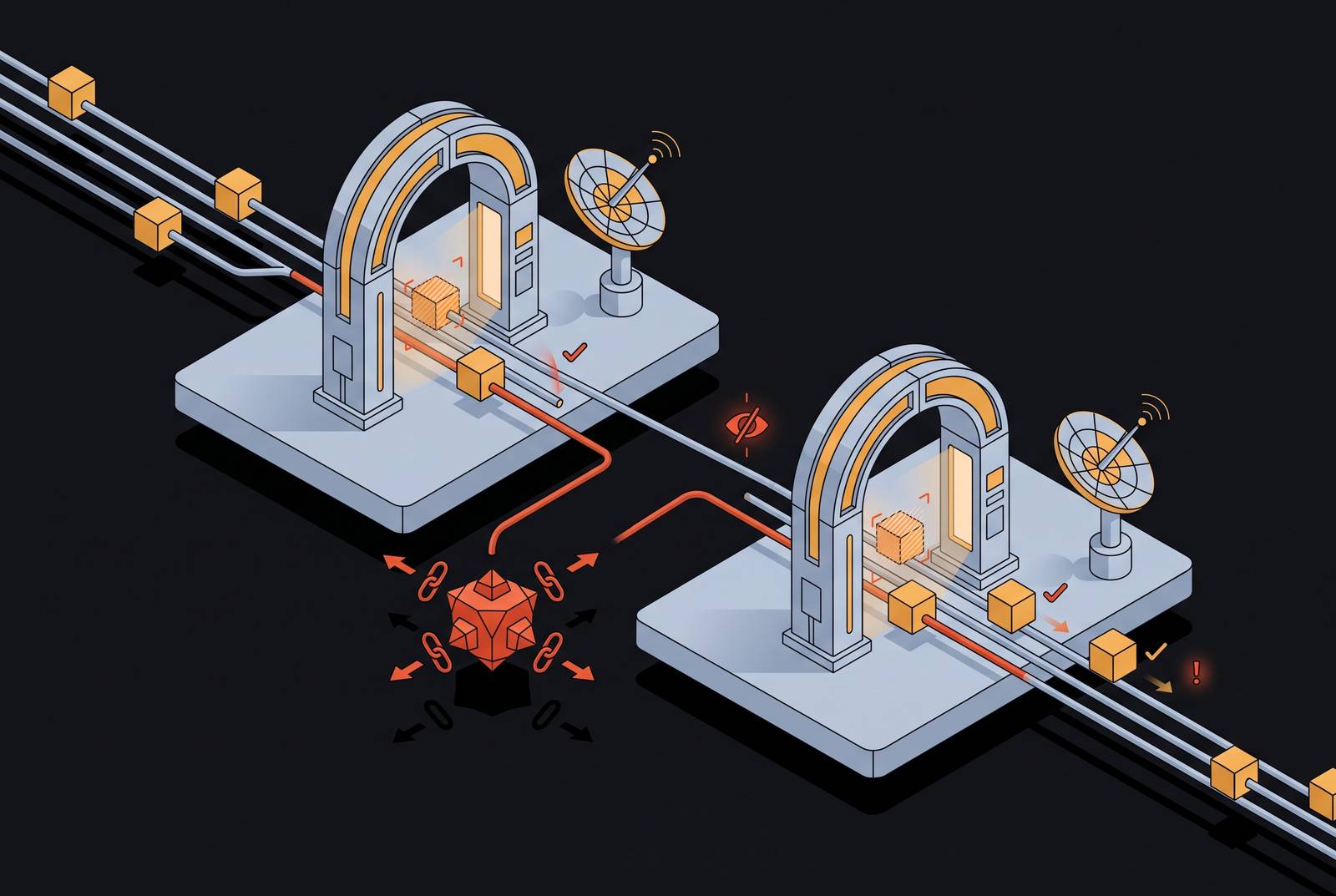
CASB and SSPM gaps in detecting agentic AI integrations come from their design. Finding and remediating shadow MCP usage requires an agent inventory, identity tied to each action, full session tracing, and controls enforced before tool calls execute. Perimeter inspection and configuration audits cannot show that work because agents use cloud-to-cloud connections to act with delegated authority.
Why the enterprise security stack was built for a world agents don't inhabit
An agent fans out across a document management platform, CRM, and Teams to complete a request. DLP sees nothing, CASB sees sanctioned applications doing what they are allowed to do, and a data security posture tool shows data that has been correctly classified. Identity logs show normal authentication. Each control reports on the part of the system it was built to inspect. Yet none explains the agent’s path through the data or whether its combined actions exceeded the request.
That gap reflects three assumptions built into the enterprise security stack, namely observable sessions, perimeter-routed traffic, and human identities. CASBs emerged to watch people access approved and unapproved cloud applications through a controllable network boundary. SSPMs addressed a different need by auditing the settings of applications security teams already knew about. Both designs made sense for a person accessing a cloud service. Neither was built for an autonomous actor moving between services on that person’s behalf.
Agents borrow authority from the user who invokes them, call tools, and reason across connected data wherever it lives. Their ability to work outside the human-to-cloud browsing path those controls expect creates a design-era mismatch. Control layers built for this work, including Runlayer, instead run within cloud tenants and across agent sessions, where each tool call shows what the agent does.
How CASB's inline proxy model fails the moment traffic stops crossing the perimeter
For a CASB’s inline inspection model to work, traffic must pass through its forward or reverse proxy. When that path exists, the proxy has something to inspect. When a connection runs directly between cloud services, the corporate network is not part of the exchange. More inspection rules cannot show traffic that never reaches the inspection point. For inline CASBs, this is a deployment-model incompatibility rather than a missing detection rule.
The same problem arises when an employee connects a productivity bot to Slack or Google Workspace through OAuth. That exchange runs cloud-to-cloud, outside the inline proxy’s view. The proxy therefore cannot show the new integration, the permissions granted to it, or the data exposure that follows. The same routing problem arises when autonomous agents work inside cloud tenants or unmanaged devices connect straight to cloud applications. An agent operating outside the proxy’s view leaves its activity unobserved even when the destination application is sanctioned.
This is no longer a marginal traffic pattern. Over 80% of SaaS interactions now occur through API-to-API integrations and background OAuth connections. TLS/SSL inspection adds a secondary problem because it can introduce latency and break certificate pinning, prompting teams to disable inspection for high-value applications. But fixing that problem would not bring cloud-to-cloud exchanges through the proxy. An MCP gateway with full session tracing addresses the deeper gap by observing tool invocations and credential use at the integration layer itself.
How SSPM's configuration-audit model fails the moment the threat is runtime behavior, not settings
SSPM starts from application settings rather than network traffic, but it still observes the wrong thing for this threat. It can establish that MFA is enabled and sharing is locked down in Google Workspace. Those findings do not explain what an agent does with the permissions available inside that environment. Correct configuration and safe behavior are separate claims. An audit can support the first without providing evidence for the second.
The audit also relies on known API integrations that cover only a small set of tier-1 applications. That leaves shadow SaaS, unapproved third-party OAuth installations, and unmanaged AI tools outside the audit’s view. Even detectable changes, such as someone disabling MFA for a service account, wait for scheduled scans. The interval between a change and discovery can span weeks. A faster scan may shorten that interval, but it does not turn a settings check into a record of agent behavior.
Identity tools record when the human authenticates, but that record leaves out the agent’s decision tree, tool calls, and path through the data. Runlayer watches agent sessions and tool calls as they happen and applies real-time policy to what agents do after permission is granted. Combining a proxy with a configuration audit does not create that runtime view. SSPM therefore misses the shadow OAuth chain, where one employee’s click connects applications across the stack faster than a scheduled audit can show what happened as a result.
Why agents evade both tools through the same mechanism — the OAuth chain
OAuth brings the two failures together. It lets applications use delegated access without each later exchange having to look like a person browsing a cloud service. A single OAuth token in a developer tool can unlock repositories, design files, and the identity provider. The connections cascade across applications that may all be sanctioned. Approval of each application does not establish visibility into the chain between them.
When a productivity bot uses that chain, the CASB sees no perimeter traffic and the SSPM may see no configuration change within its audit model. Data can move before either tool has anything to flag. The important distinction is between the invoking identity and the acting identity. A human starts the request, but a non-human agent performs the work with that human’s effective permissions. A log of the initial authentication does not show everything done afterward.
The permissions themselves may be working exactly as intended. An agent inheriting a full session token can do everything the user can do, so an agent acting for an admin can carry admin authority even when confused or manipulated. This is delegated access without a control that follows the delegate’s actions. Static API keys and service-account tokens extend the problem beyond the request because they may remain valid after the workflow ends, leaving access in place after the agent’s task has disappeared from view.
What the MCP layer adds to the attack surface that CASB and SSPM have no category for
The Model Context Protocol makes this mismatch concrete at the point where agents reach tools. In the Drift and Sentry incidents, the agent was authenticated, the application was sanctioned, and the OAuth token was valid. The checks performed by the legacy tools passed even though the attack succeeded. Valid access was not evidence of valid intent.
OWASP’s MCP project names threats that sit outside those checks, including tool poisoning, command injection and execution, shadow MCP servers, and context injection and over-sharing across shared agent sessions. Schema poisoning and tool shadowing are sub-variants of tool poisoning. These attacks concern what an agent is induced to do with a tool or shared context. They do not depend on producing the perimeter event or configuration drift that CASB and SSPM inspect. Adding the names of these attacks to a rule set still gives the tools no way to see them.
Authentication presents another gap. The MCP specification leaves authorization optional for STDIO transport, so local-server deployments have no mandatory authentication controls, despite the July 2026 revision hardening requirements for remote servers. Trend Micro found 492 MCP servers that were open to the internet and had no client authentication or traffic encryption. Check Point Research showed how poisoned repository configuration files could lead to remote code execution in Claude Code.
Tenet Security’s June 2026 Sentry MCP event-injection research identified thousands of organizations with exposed, injectable DSNs and achieved a high agent execution rate in testing. That finding describes exposure and controlled testing. Sentry declined full remediation. The incident matters here because an attack could pass through an authenticated, sanctioned path without failing the checks on which CASB and SSPM rely.
How blind are organizations to employees using unauthorized MCP servers
In practice, security teams often cannot connect an employee to an unapproved integration, its active credentials, and the data it can reach. Most organizations cannot see what data AI tools exchange with their SaaS applications. Most also report that their tools cannot detect OAuth token or API key abuse or distinguish human from non-human behavior. Knowing that an employee uses an AI application is therefore a much weaker claim than knowing what that application can do. Shadow MCP usage detection requires the latter.
Only a minority of organizations have full visibility into which agents communicate with each other. The remaining environments contain flows that security teams have not mapped, scoped, or reviewed. That limits both prevention and investigation because the relevant activity extends beyond one named tool.
Roughly a third of organizations experienced unauthorized data exfiltration through SaaS-to-AI integrations in a single year, including organizations running over a dozen dedicated security tools. A large majority of CISOs regard agents as a critical or significant security risk. Yet most organizations already use agents while a large proportion lack a governance framework, and only a small fraction have a well-developed strategy for non-human identities. Awareness of the risk has moved faster than the ability to control it.
Confidence is also unevenly distributed. CISOs report high confidence in visibility into ChatGPT, Claude, Copilot, and Gemini, but much less confidence in the long tail of shadow AI. That long tail is precisely where known-application audits and perimeter inspection have the least reach. Only a minority feel ready to secure agentic AI applications. The gap is therefore not just discovery of another unauthorized server, but the inability to monitor, audit, and respond to the activity behind it.
What a purpose-built control layer must do that CASB and SSPM architecturally cannot
An adequate response starts with an agent inventory that records what exists, who owns it, and what it is authorized to do. Without that foundation, root-cause remediation and ownership assignment have no dependable starting point. For shadow MCP usage, a centralized gateway must cover the full range of MCP servers enterprise agents can reach. Discovery must extend to unmanaged agents, MCPs, skills, plugins, and client configurations.
OAuth 2.1-based identity binding gives agents scoped user permissions instead of standing credentials, with SSO and SCIM tying identity to each action. Built-in credential handling and just-in-time credentials address access that would otherwise outlive the task. Full session tracing must show tool invocations and credential use. Together, these capabilities connect the employee, the agent, the integration, and the authority used.
Enforcement belongs at the tool call, before the action reaches company systems. Runtime detection must examine tool poisoning, prompt injection, intent drift, and exfiltration through the relationship between the request, the calls made, and the data accessed. Destructive or irreversible actions require human-in-the-loop approval. These requirements answer the earlier failures directly rather than asking a proxy or audit to infer behavior it cannot see.
Runlayer is one implementation of this control-layer approach, combining agent enablement, control, and security. It supports agent setup from Slack, identity tied to actions through SSO and SCIM, real-time detection of MCP-specific threats, and tamper-proof audit logs. Enterprises need controls that can account for what agents actually do, because a record of approved applications and successful logins cannot carry that burden.