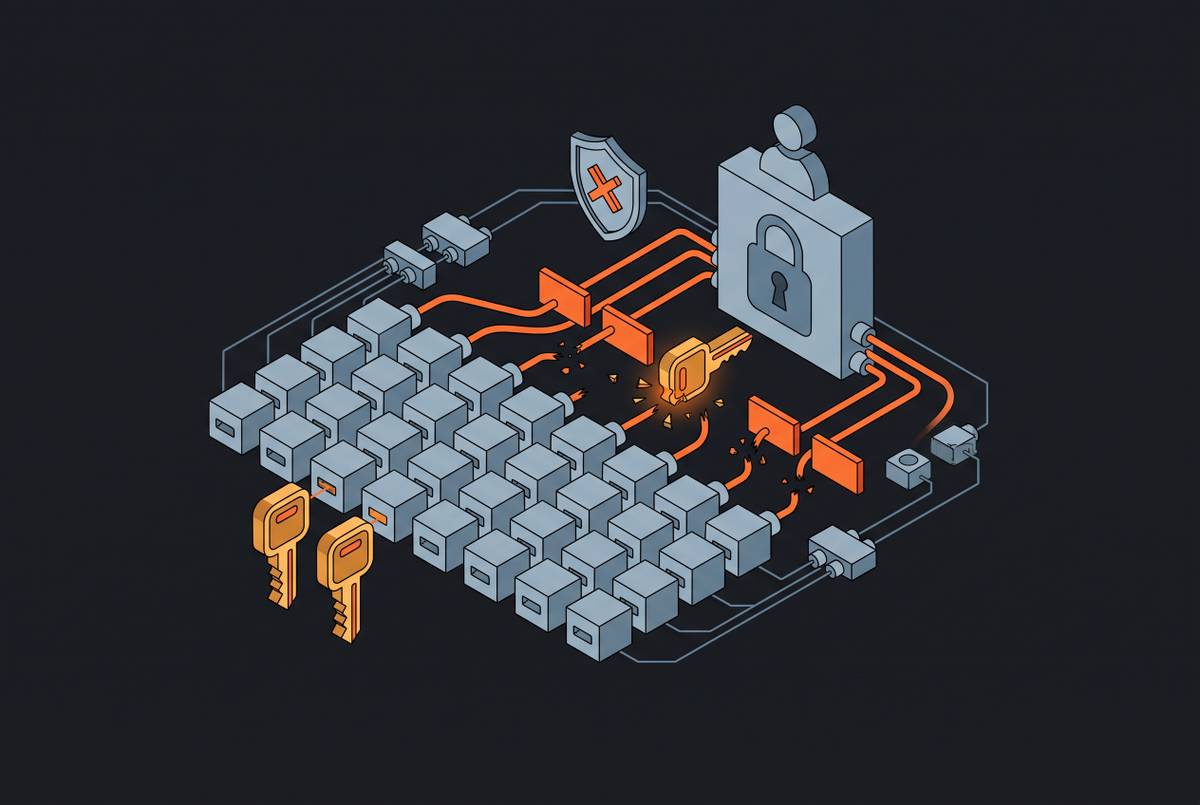
SSO and SCIM Provisioning for AI Agent Principals
Enterprises need to extend SSO and SCIM to treat AI agents as first-class principals.
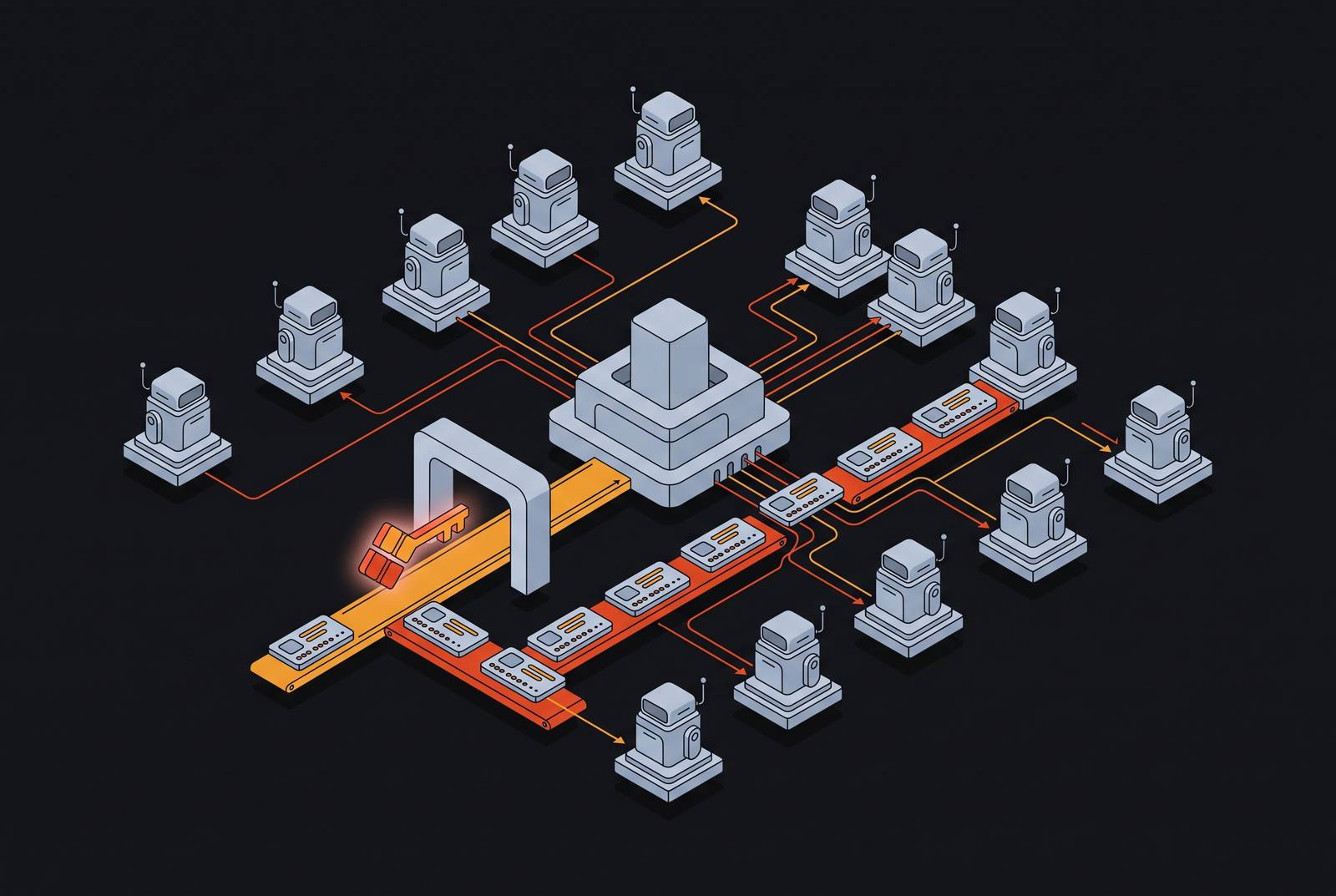
Enterprise identity infrastructure was built for one kind of actor: a person who logs in, gets a session, and does things. AI agents don't fit that mold, and the gap between what SSO and SCIM were designed for and what agentic AI actually does is now the central architectural problem in enterprise security. Solving it requires rethinking what a "principal" even is, and rebuilding the provisioning lifecycle around that new definition.
Why AI agents break the principal model that SSO and SCIM were built on
The principal model in enterprise identity and access management has one job: authenticate a human, hand them a session, let them act inside it. Everything downstream, permissions, audit logs, revocation, assumes a person sitting behind the keyboard, initiating one action at a time. AI agents don't behave that way, and they weren't designed to.
Agents act on their own, without a human clicking "go" on each individual step. They operate inside delegation chains, often carrying out work on behalf of a user, or another agent, rather than acting under their own name. Their lifespans are ephemeral: orchestration frameworks spin them up, clone them, and tear them down at machine speed, a world away from the slow, deliberate cadence of an HR onboarding ticket. And the permissions they need shift mid-task, based on what the job in front of them actually requires.
None of this is new in isolation. Machine identities have outnumbered human ones inside the enterprise for a while now, and that population was already hard to keep a handle on. AI agents stack a harder problem on top of an existing one. A CSA-OASIS State of NHI and AI Security 2026 report found that 78% of organizations have no documented policy for creating or removing AI identities. That's the operational default, today, at a huge majority of companies running this stuff in production.
The fix isn't cosmetic. Enterprises need to extend SSO and SCIM to treat agents as first-class principals, complete with their own provisioning lifecycle, their own bound permissions, and an identity that can actually be traced end to end. Getting there takes deliberate architecture.
How agents differ from service accounts, bots, and every prior class of non-human identity
The easy move is to lump AI agents in with service accounts and declare identity management already handled. It's the wrong frame, and it'll cost you.
Service accounts are static. Someone provisions them by hand, ties them to a piece of infrastructure, and they do one thing, over and over, using a credential that might live for years without rotating. AI agents are goal-directed instead of task-fixed. They get spun up dynamically, they touch multiple tools and services within a single unit of work, and their credentials need to carry delegation information, not just a static secret. Some agents run for a few seconds. Others run for months. There's no single shape to point at.
Three structural mismatches explain why the old patterns don't hold up. First, delegation versus direct credentials: agents frequently act for a human or another system. The auth flow needs OAuth On-Behalf-Of patterns and a traceable delegation chain, not one static credential handed out at setup. Second, runtime identity versus pre-provisioned identity: classic IAM builds identities at admin time, but agents need purpose-bound identities issued and scoped at the moment a task begins. Third, the ephemeral lifecycle itself: orchestration systems spawn short-lived, task-specific agents constantly, and expecting persistent, long-lived credentials to work cleanly across that churn just isn't realistic operationally.
Autonomy is what separates agents from everything that came before. A service account doesn't decide anything, it executes exactly what it's configured to execute. An agent chooses which tool to call and in what order, based on the task in front of it. A misconfigured agent doesn't just sit there leaking data quietly. It acts on the misconfiguration. It can move across several downstream systems before a single human notices anything is wrong.
Over-permissioned access appears, according to CSA-OASIS, as the single biggest pain point cited by organizations managing non-human identities. A static service account given too much access becomes a latent risk sitting on a shelf. An agent given too much access becomes a risk that's actively being exercised, right now, across every tool it touches.
MCP authentication spec requirements and remaining gaps
Because MCP is the dominant interface layer through which AI agents connect to tools, APIs, databases, and services, its auth model is central to the broader identity challenge.
The June 2025 revision of the MCP spec mandated OAuth 2.1 with PKCE for HTTP-based servers, and the 2026-07-28 specification tightens discovery, token validation, and adds options for unattended agents and centrally managed access. PKCE matters here because it closes a specific hole: the code verifier needed to complete the authorization exchange is known only to the legitimate client, so intercepting the authorization code alone doesn't get an attacker anywhere. The spec goes further still by banning the implicit grant entirely, along with the plain PKCE method that OAuth 2.0 used to allow.
None of that touches the risk that a service acting on another's behalf can be tricked into misusing its own authority, though, and that's where things get messy. A token minted for one specific service shouldn't work as a skeleton key across an entire chain of tools. Researchers have flagged "caller identity confusion" as a live vulnerability class in the wild: a single OAuth grant gets cached as server-wide state and then reused across unrelated requests that have nothing to do with the original grant. When an MCP server turns around and calls an upstream API on someone else's behalf, it's acting as a client in its own right and needs its own token for that call. If that step is skipped, the server becomes a middleman holding more authority than the person who called it was ever entitled to.
The gap between spec and practice is wide. Only about 8.5% of public MCP servers use OAuth at all, and a 2026 security audit found roughly half of them running with no authentication controls whatsoever MCP Security Statistics 2026: CVEs, Vulnerabilities & Breach Data - P… Agentic MCP Security Best Practices Guide – Lab Space. Even where authentication is done right, authorization is a separate problem the spec doesn't touch: a valid, correctly scoped token proves who's calling, but it says nothing about which tools that caller is actually allowed to invoke. That decision needs an independent RBAC or policy layer sitting on top. The 2026 MCP roadmap does list SSO-integrated auth and audit trail infrastructure as enterprise readiness priorities, but both are slated as extensions built on top of the protocol rather than changes to the core spec itself, and remain, for now, unsolved at the base layer. MCP servers act as OAuth 2.1 resource servers, with the enterprise IdP issuing and validating the tokens.
The specific ways absent or incomplete SSO breaks agent governance
SSO for human employees solves two distinct problems at once: one login across every application, and a central identity provider that's the single source of truth for who someone is. Agents need both, and skipping either one produces failure modes that are painfully specific, not vague or theoretical.
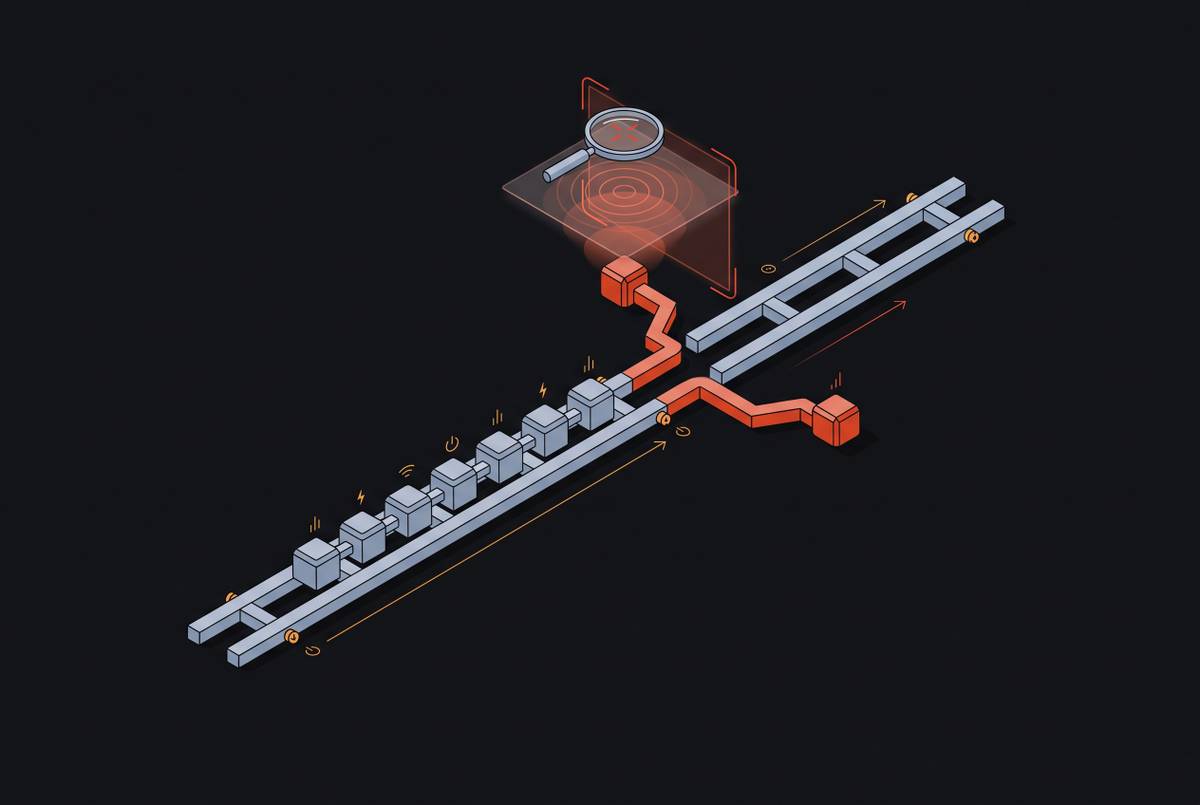
The first is orphaned credentials. A contractor leaves, their company account gets closed out properly, but the local credential they set up on some AI platform sticks around, because offboarding checklists were never written with agent registrations in mind. The agent that credential belongs to just keeps running, with whatever permissions it had, until someone happens to notice by hand.
The second is stale permissions. An employee switches teams, their group membership in the identity provider updates correctly, but the AI platform was never wired into SSO in the first place, so it never gets word of the change. Agents tied to that person's identity keep the old permissions while the human moves on to new ones, so neither the agent's access nor the person's actual role match what's on paper anymore.
The third is shadow agent proliferation. Skipping SSO as the mandatory path in leads teams to find their own way around it, registering agents straight against tools using static API keys or personal access tokens. Only around 23% of organizations, per CSA-OASIS, have anything resembling a formal AI-agent identity strategy. Which means the majority don't even have a central list of which agents exist, let alone a record of what those agents are supposed to be allowed to do.
A vendor-neutral extension called Cross App Access addresses part of this directly, by shifting authorization away from the individual and over to the enterprise identity provider, so the enterprise (not each employee, not each tool) decides which agents get to touch which applications.
The principle common to all three failure modes is the same. SSO for agents means the identity provider is the one and only authority on agent identity. Not each tool's own local credential store, keeping its own separate books.
Extending SCIM to provision, sync, and deprovision agent identities across the lifecycle
SCIM is the protocol that lets an identity provider create, update, and delete accounts across every connected application, using one shared schema and one API. Extended to cover agents, it becomes the mechanism that turns an agent into a managed principal instead of a loose credential floating around somewhere.
There's an IETF draft that extends SCIM past human users specifically, introducing Agents and AgenticApplications as schema objects in their own right. Under that model, every agent gets an owner, a role assignment, and a lifecycle that's actually trackable end to end. Certificates and protocol metadata get embedded directly into the SCIM resource itself. Token rotation, revocation, and expiration turn into schema-native operations handled by the system, instead of manual steps someone has to remember to do.
Creating or hiring means registering the agent in the identity provider, assigning it an owner, and binding its initial permissions. Sync access: SCIM pushes the agent's accounts and role memberships out to every connected application automatically, so nothing drifts out of step. Retire: deactivate the identity, kill any active sessions, and clean up whatever credentials are left behind, since simply flipping an account to "inactive" without revoking live sessions leaves a door wide open.
Skipping SCIM leaves agent credentials living off the books entirely, tucked into config files, environment variables, CI/CD pipeline settings. At that point the organization loses track of what actually exists, who's responsible for it, and whether anyone still needs it. Only 14.4% of agents make it to production with full security approval, and SCIM-based lifecycle management is one of the few controls that actually closes that gap between deploying something and governing it properly MCP Security Statistics 2026: CVEs, Vulnerabilities & Breach Data - P….
What JIT credential issuance and ephemeral identity patterns add to SSO and SCIM
SCIM and SSO are built for agents with a persistent identity, an agent that's going to stick around and do a job for a while. They're a poor fit for agents that get spawned for a single task and vanish minutes later. That gap needs its own pattern.
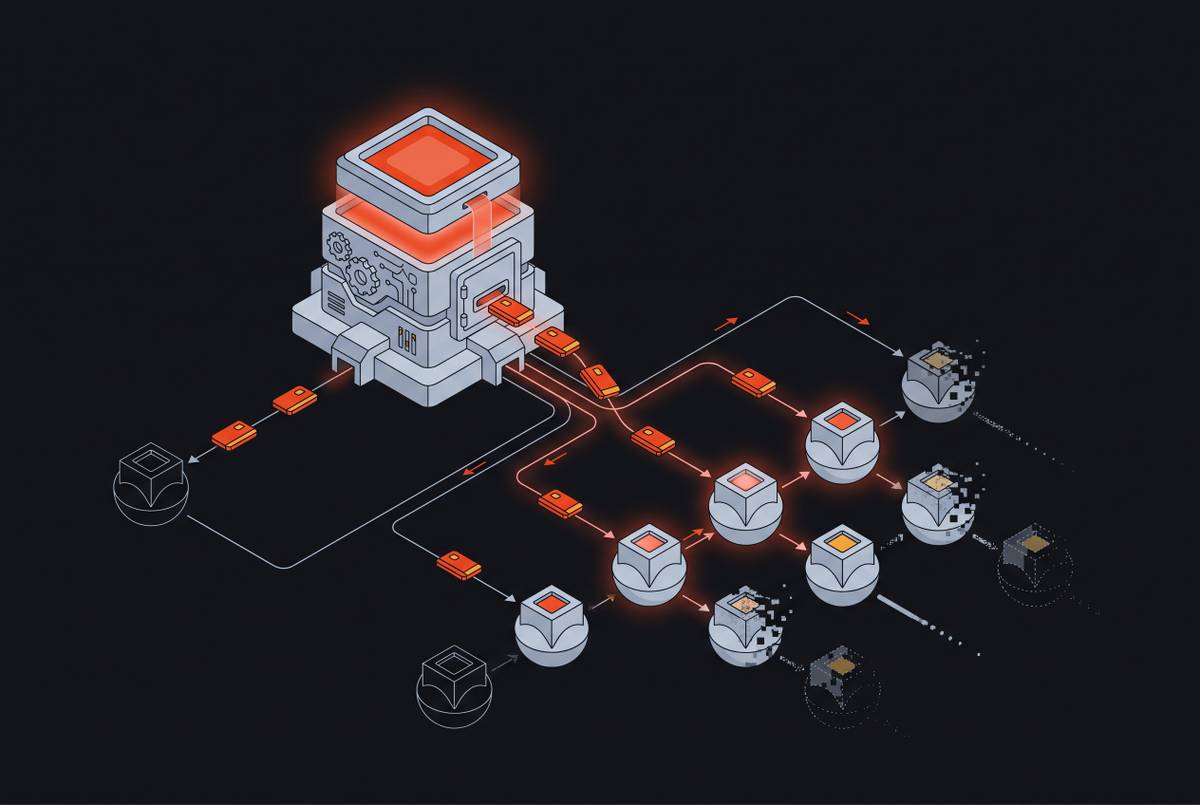
Just-in-time credential issuance is that pattern. The identity provider, or a dedicated credential broker sitting in front of it, hands out a short-lived, purpose-built token the moment a task actually starts, scoped tightly to exactly the tools and permissions that task needs and nothing more. There's no long-lived secret sitting around waiting to be stolen, forgotten, or left unrotated for a year. The credential simply stops working when the task ends. Revocation isn't a step someone has to remember; it's just what happens.
This lines up directly with the most common credential risk occurring across the MCP ecosystem today: static API keys and personal access tokens, over-provisioned from the start, that grant indefinite access the moment they leak. JIT issuance also demands something new from the authorization layer: it has to understand task context. What's the agent trying to do, on whose behalf, for how long. That's the same delegation chain problem raised earlier, appearing again from a different angle.
The architectural shift this forces is real. Identity infrastructure for agents can't just sit at the login gate anymore, checking credentials once and walking away. It has to operate at runtime, with the identity provider participating in every single task an agent runs. Handled this way, it also quietly solves the earlier issue of credentials outliving the task they were built for: a credential that was never built to outlive its task simply can't be left behind, because there's nothing left to leave behind.
How threat patterns specific to MCP make agent identity governance a security imperative, not just an IT hygiene issue
None of this is theoretical, and the numbers back that up. Between January and February 2026 alone, security researchers filed over 30 CVEs targeting MCP servers, clients, and the infrastructure sitting around them. The worst of the batch, CVE-2025-6514, scored a 9.6 on CVSS and hit the mcp-remote proxy package across more than 437,000 installed environments. That's a production-scale exposure, not an edge case buried in a research paper.
The operational fallout tracks the governance gaps described throughout this piece almost exactly: somewhere between 47% and 53% of organizations report an AI agent that either exceeded its permissions or caused an outright security incident MCP Security Statistics 2026: CVEs, Vulnerabilities & Breach Data - P…. That range isn't a rounding error, it's a coin flip, and it says the failure mode is closer to routine than rare.
Three MCP-specific attack classes occur, and strong agent identity governance directly mitigates each one. Tool poisoning and prompt injection manipulate an agent's decision-making from the inside, feeding it malicious input that changes what it decides to do next, and behavioral monitoring tied back to a solid agent identity is what catches an agent drifting off its expected pattern. Caller identity confusion, per research at arxiv.org (2603.07473), happens when a single OAuth grant gets cached as server-wide state and reused for unrelated requests, and JIT, task-scoped tokens prevent that by design. Credential theft and exfiltration, meanwhile, usually comes down to static API keys committed to a repo by accident or logged somewhere in plaintext, and SCIM-native credential lifecycle management removes the long-lived secrets that make this kind of theft worth attempting.
The NSA's May 2026 Cybersecurity Information Sheet on MCP security calls out authentication, authorization, and input validation as necessary protections, and it points to a structural cause: MCP inverts the usual client-server relationship, with servers querying and executing on behalf of clients, and that inversion opens up attack paths that traditional security models have "largely not well-traced". Identity governance and security aren't two separate conversations here. An agent whose identity isn't centrally managed can't be watched properly, can't be shut off cleanly, and can't be traced back to a cause when something eventually goes wrong.
The architectural requirements for an enterprise-grade agent identity platform
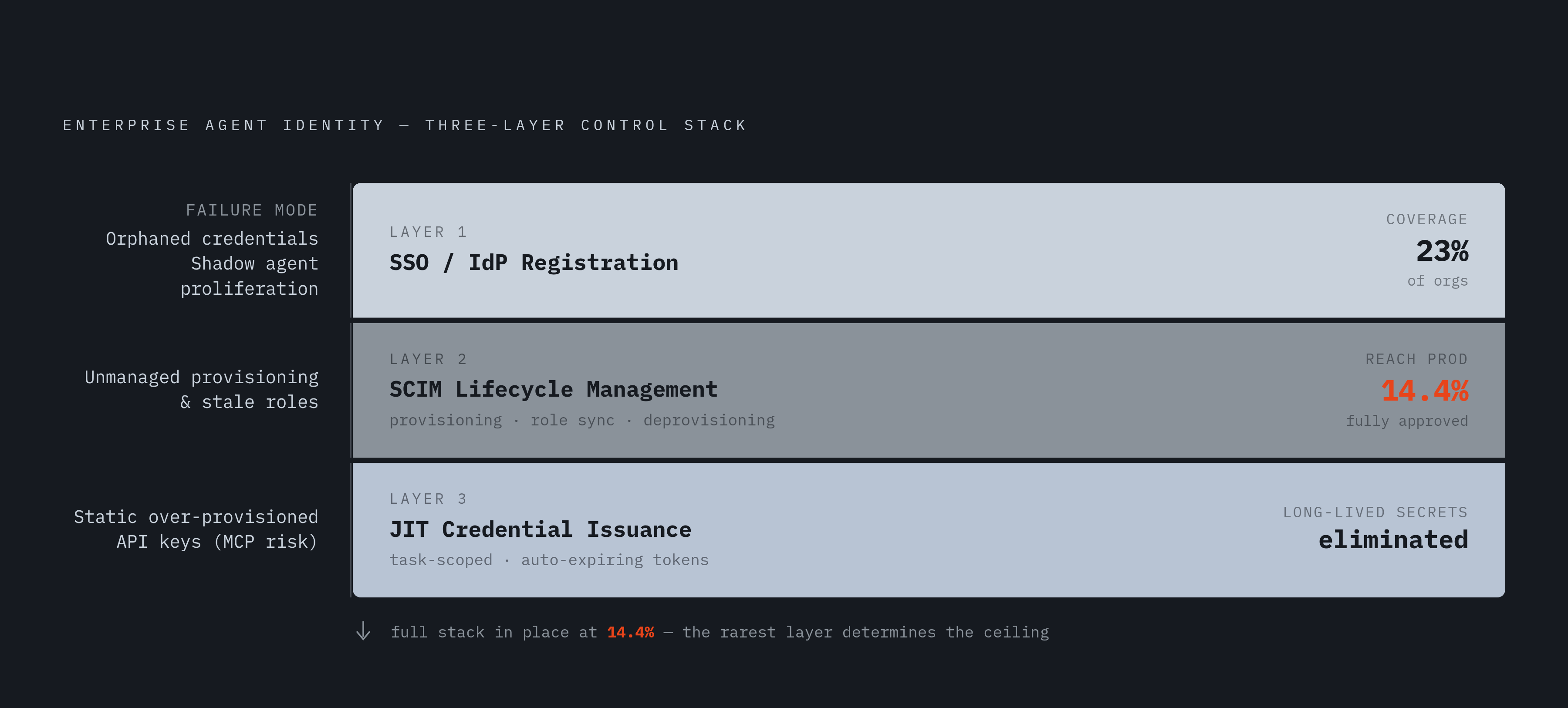
Putting every gap from the previous sections side by side reveals a pattern: no single control closes this on its own. A workable platform needs several pieces operating together, at the same time.
On the identity side, every agent needs an identity provider-backed registration rather than a local credential invented by whichever team spun it up, since the identity provider has to be the authority on whether an agent exists at all. Creation, role syncing, and deprovisioning need to run through the same automated SCIM-based workflows already used for human employees MCP Security Statistics 2026: CVEs, Vulnerabilities & Breach Data - P…. Credentials need to be issued just-in-time and scoped to the task at hand, expiring on their own, with no long-lived secret sitting in an environment variable somewhere waiting to be found. And token flows need to be delegation-aware, using OAuth On-Behalf-Of and token exchange to keep the full human-to-agent-to-tool chain traceable from one end to the other.
On the authorization side, policy decisions can't stop at the front door. And scope needs to shrink at the moment of issuance, so an agent gets exactly what the current task calls for.
None of these pieces work in isolation. SSO without SCIM leaves you with clean logins and no lifecycle behind them. SCIM without JIT issuance leaves long-lived credentials sitting around for attackers to find. Authentication without a real authorization layer proves who's asking without ever answering what they should be allowed to do.
Sources
- Give Them an Inch and They Will Take a Mile:Understanding and Measuring Caller Identity Confusion in MCP-Based AI Systems
- MCP Security Statistics 2026: CVEs, Vulnerabilities & Breach Data - Practical DevSecOps
- Model Context Protocol (MCP): Security Design ...
- Agentic MCP Security Best Practices Guide – Lab Space
- A First Measurement Study on Authentication Security in Real-World Remote MCP Servers
- AI Agent Resource Extension for the System for Cross-domain Identity Management (SCIM)
- Identity Management for Agentic AI