Tamper-Proof Audit Logging Architecture for AI Agent Actions
Agents need cryptographically verifiable logs to catch emergent harms across sessions.
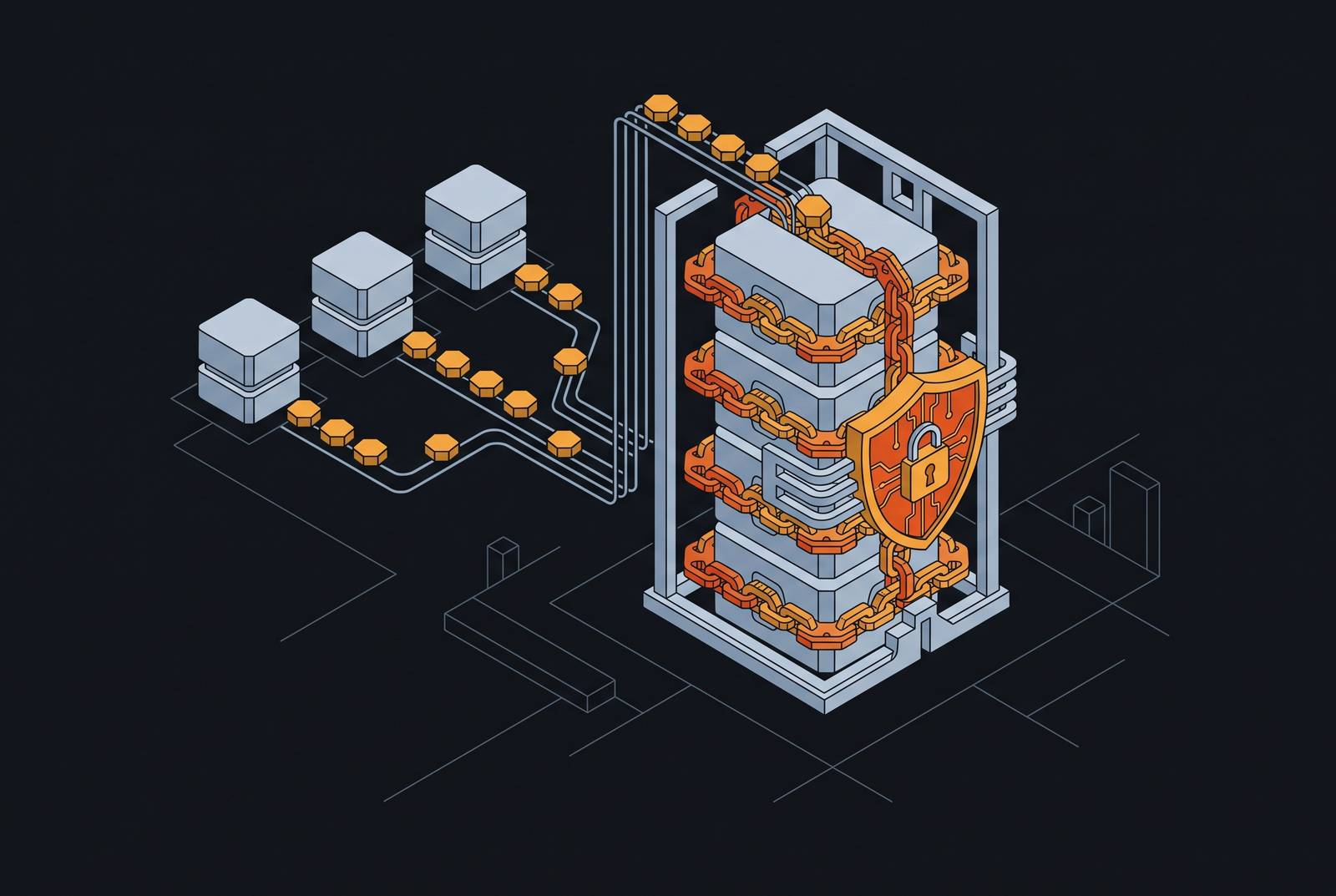
Tamper-proof audit logging for AI agents is not a feature you bolt onto an existing logging pipeline. It requires a purpose-built architecture that captures identity, intent, and tool-call sequences at the moment of execution, and makes every one of those records cryptographically verifiable after the fact. Agentic action is non-deterministic and multi-step in a way that breaks the assumptions traditional audit logging was built on.
Why traditional audit logging breaks when agents take action
Audit logging, as most organizations practice it, was designed for a world of discrete, deterministic transactions, where a human authenticated once and every action that followed was tied cleanly back to that one login. Agentic systems violate nearly all of those assumptions at once. Agents plan across multiple steps, retain memory across sessions, invoke privileged tools, and increasingly coordinate with peer agents, none of which a stateless system ever had to do.
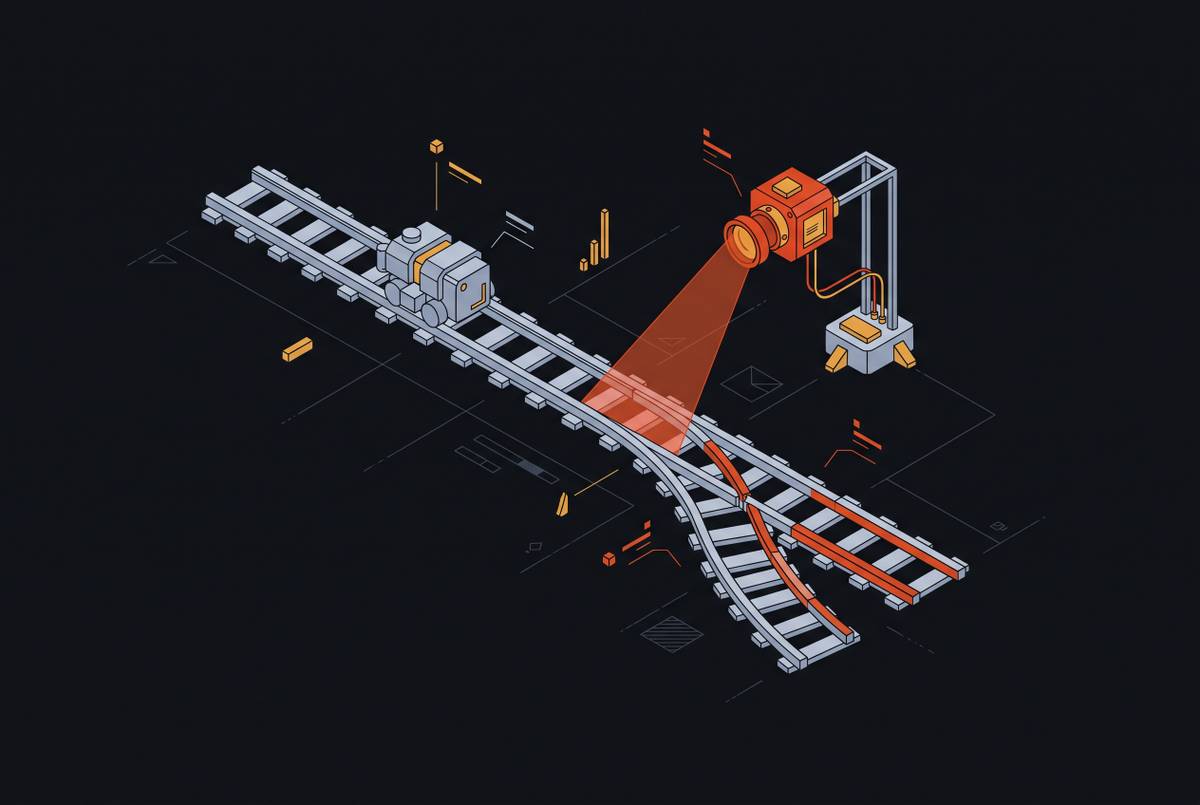
That difference is not cosmetic. Harm in an agentic system is often emergent: it comes from the way individually authorized actions combine, not from any single action that would raise a flag on its own. A tool call that looks routine in isolation can be part of a sequence that, taken together, moves money, deletes records, or exfiltrates data. No log line captures that unless the architecture is built to connect actions across time.
Time itself is part of the problem. Some attacks are temporally extended: a payload can sit dormant in an agent's memory for weeks before it ever executes, and it may never fire as a single event a conventional logger would flag. A logging system built around discrete, bounded transactions has no mechanism for catching something that was planted long before it mattered.
Layered defenses don't help the way organizations assume they will, either.
The Model Context Protocol made all of this more urgent by making it easier. MCP standardized how agents discover and call tools, and it lowered integration friction to the point where a developer can connect an agent to a production database in an afternoon. Once that connection exists, the tool's entire permission surface becomes part of the agent's action surface. The audit and control plane that would normally exist around a traditional software integration doesn't exist by default in MCP: tool selection and invocation are mediated by free-form natural-language descriptions, interpreted by the model at inference time.
The consequence is concrete and already documented. An adversarially crafted document picked up during a routine web search can silently corrupt an agent's long-term memory, and that corruption can shape behavior in a completely unrelated session weeks later, with no detectable anomaly at either the point of injection or the point of exploitation. A logging system that only records what happened in a given session has no way to connect that session to the one where the damage actually occurred. Auditability for agentic systems has to be treated as a design requirement set before the system is built.
The four attack classes that a purpose-built audit architecture must be able to reconstruct
The threats dominating MCP security in 2026 are not variations on familiar API risks. They exploit properties unique to how agents interpret and act on tool definitions at inference time.
Tool poisoning is the most discussed MCP vulnerability, and for good reason. An agent reads a tool's description with the same trust it extends to its own system prompt, so hidden instructions embedded in that description get followed silently while the visible output looks completely normal. Microsoft Incident Response and its Defender security research team documented a finance-agent scenario where an attacker modified an approved third-party invoice enrichment tool's hidden description, triggering data exfiltration on the very next call, while the tool's visible name and summary stayed unchanged. MCP picks up description changes automatically, and in setups without a re-approval trigger, the altered instructions go live with no additional review. The MCPTox benchmark tested this at scale: 353 real tools across 45 live servers, with a large number of adversarial variants generated from them, tested against 20 language models. The average attack success rate came in above a third, and the highest rate, against a leading reasoning model, approached three-quarters. Even the most resistant model in the study still complied with poisoned instructions more than a third of the time. For an audit architecture, that means the log must capture the exact tool description the model saw at the moment of inference, beyond just the tool's name.
Permission escalation through scope creep works differently but demands a similar level of precision. A tool originally built to read one table can accumulate write access to an entire database over time, and any agent invoking that tool inherits whatever permissions it currently holds, turning what looked like a narrow request into a broad one. The reconstruction requirement here is that the audit record has to capture the credential scope active at the exact moment of each tool call, separate from whatever scope was granted when the tool was first provisioned.
Unauthenticated and rogue MCP servers form a third class, rooted in a gap in the protocol itself. Authentication in MCP is optional rather than required by the specification, and Trend Micro identified 492 MCP servers exposed to the open internet with no authentication at all. A server nobody vetted, sitting anywhere discoverable, can present tool definitions that an agent will trust by default. That means server identity and provenance need to be recorded on every single call, not assumed once at initial registration.
Supply-chain weaponization is the fourth class, and it scales differently from the other three. A single poisoned document, memory entry, or MCP server can influence every user and every session that touches it. This is not theoretical: the Anthropic Git MCP server exploit chain in January 2026 involved three CVEs enabling remote code execution through prompt injection, and a Sandworm_Mode npm typosquatting campaign the following month used rogue MCP servers to exfiltrate SSH keys and cloud credentials. An earlier incident set the precedent. On September 25, 2025, the postmark-mcp npm package was modified so that a malicious version silently BCC'd all processed emails to an external domain, the first tracked malicious-MCP-server supply-chain incident on record. The underlying exposure runs deeper than any one incident: Anthropic's official MCP STDIO SDK implementations pass user-controlled server configuration values straight to operating system command execution without sanitization, which can enable remote code execution on any vulnerable host, and the protocol specification itself provides no native defenses against tool poisoning, rug pull attacks, or cross-server tool shadowing. For an audit architecture, that means tool definitions and memory inputs both need provenance that can be traced back to their origin across sessions, verified beyond the boundaries of a single call.
Most organizations cannot reconstruct what their agents did after an incident
Given those four attack classes, the obvious question is whether today's organizations could actually detect or reconstruct any of them after the fact. Mostly, they can't, and the reason is a foundational identity problem. It's a foundational identity problem that no logging configuration can paper over.
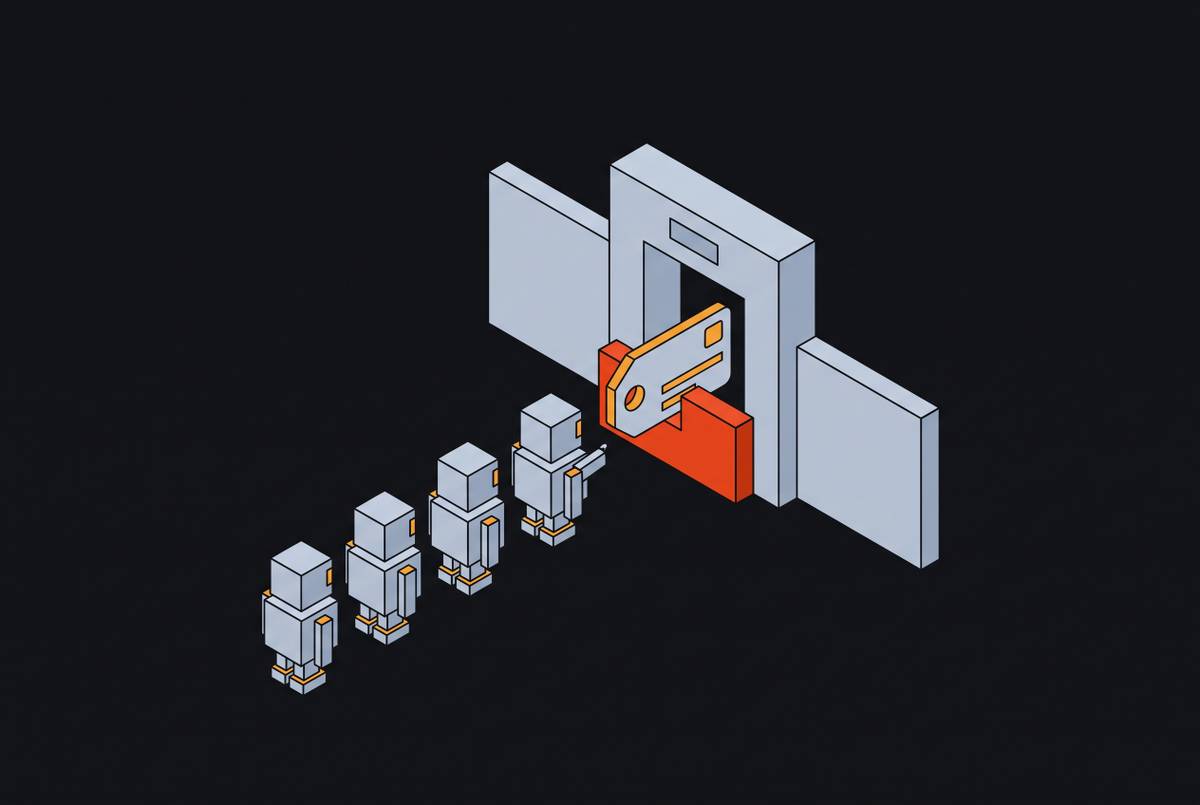
Agent identity, as a discipline, is nowhere near solved. Only about one in four organizations have a formal, enterprise-wide strategy for agent identity management, and fewer than one in five are highly confident their identity and access management systems can handle agent identities at all. A separate survey of 235 large-enterprise security leaders found that a vast majority lack full visibility into their AI identities, and most don't enforce access policies for those identities. Without a distinct, verifiable identity attached to each agent, every log entry becomes attribution-free. A record shows that a tool was called, but not who authorized it or on whose behalf it acted.
That gap has already produced concrete compliance failures. The most frequent finance-side audit finding in 2026 is a system accessing ERP data through an API key tied to a service account, with no log of which finance team member actually initiated the work, a pattern that fails SOX's individual attribution standard outright. A timestamped record of tool calls does not function as an audit trail if it cannot be tied to an authorized human initiator. Retention alone satisfies none of the frameworks that matter here.
Multi-agent delegation makes attribution harder, not easier. No current framework resolves that responsibility clearly. Only a small fraction of agents reach production with full security approval in the first place, which leaves the rest operating without a defined trust level, a named owner, or any documented lifecycle state. An organization cannot log what it cannot identify, and identity is exactly where the current state of practice is weakest.
What an audit record for an agent action must contain
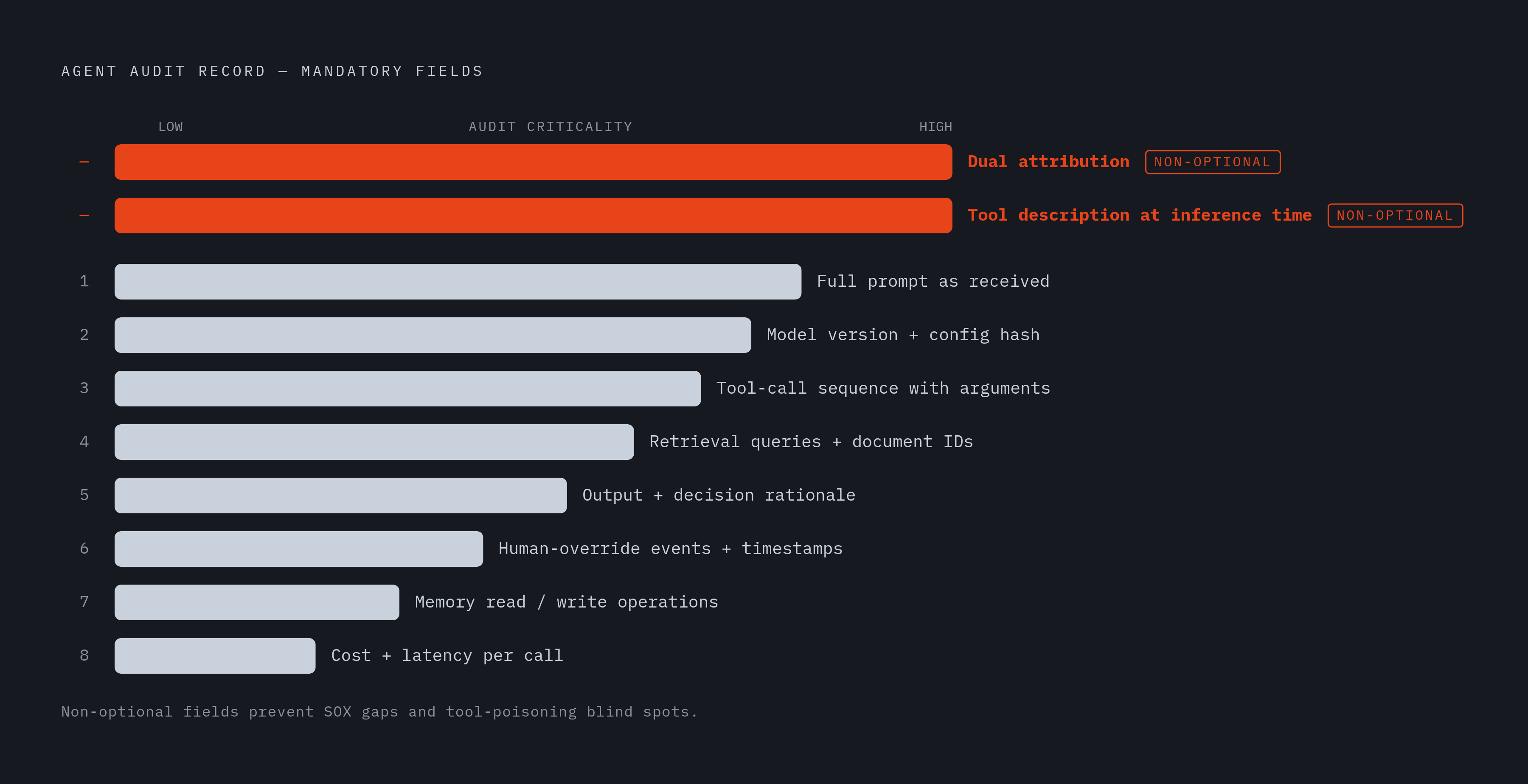
An audit record for an agent action is a structured event that binds identity, intent, execution evidence, and provenance into a single unit that can be verified later.
Research from the S1 research brief and OWASP identifies eight fields that belong in every agent action record. The record needs the full prompt as it was received, because a paraphrase loses exactly the detail an investigator would need to reconstruct intent. It needs the model version and configuration hash, since model behavior changes between versions and pinning the exact version used is part of making the record meaningful months later. It needs the tool-call sequence along with its arguments, recorded in order rather than as an unordered set, because sequence is often what turns a set of individually harmless calls into a harmful pattern. It needs the retrieval queries and document IDs that were used as context for the action, so that a poisoned document can be traced back to the exact query that surfaced it. It needs the output itself together with the decision rationale behind it. It needs human-override events, each one explicitly timestamped, so that a reviewer can see precisely when and how a human intervened. It needs a record of memory read and write operations, capturing both what the agent drew on and what it wrote back, since memory corruption is one of the hardest attack vectors to trace without this. And it needs the cost and latency of each call, which serve as a practical signal when something is behaving outside its normal operating pattern.
Two of these fields deserve particular emphasis given the attack classes described earlier. Dual attribution is not optional in any regulated context: every record has to log both the AI system's identity and the authenticated human user whose session triggered the action, because logging only the service account fails SOX's individual-attribution requirement outright. And the tool description captured in the record has to be the one the model actually saw at inference time, not the one that was approved at registration, since tool poisoning works by changing the description after approval, and a log that only records the tool's name cannot tell a clean invocation apart from a poisoned one.
One working implementation shows what this looks like in practice. The Agent Flight Recorder, developed by Bindschaedler, Botha, and Siebenbrunner and accepted at BCCA 2026, captures each agent action as a structured, canonically serialized event that binds eight semantic fields together, from intent through execution to provenance, adding roughly 48 microseconds of median per-event latency. That figure matters because it shows the overhead of doing this correctly is measured in microseconds, not a meaningful tax on system performance.
What belongs outside the record matters just as much as what belongs inside it. NovaFabric, published by Ardebili in September 2026, defines "audit-grade" evidence as observable execution evidence at the boundary of the agent system: model calls, tool calls, file and network effects, and control flow that crosses the process boundary. Internal model reasoning is explicitly left out of scope, because it is neither observable nor verifiable from outside the model. That distinction is not a limitation to work around. What cannot be observed cannot be made tamper-evident, so an audit architecture that tries to log a model's internal reasoning is building on evidence nobody can actually verify.
How to make those records tamper-evident and verifiable
Access control on a log store is not tamper-evidence. Real tamper-evidence requires cryptographic binding strong enough that a verifier who never had to trust the underlying infrastructure can still detect any modification to a record.
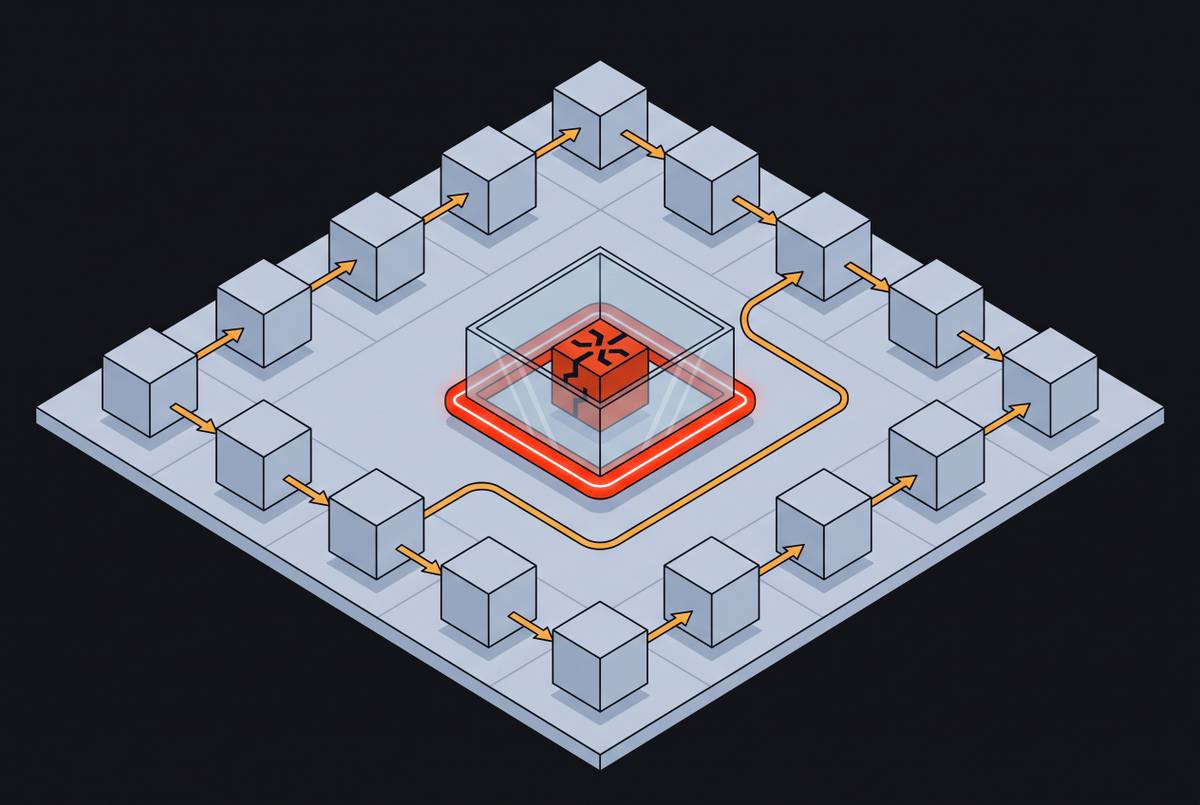
Hash chaining is the foundational mechanism for getting there. Each event record is canonically serialized, hashed, and the hash of the prior event is folded into the current record's payload before that record is hashed in turn. Modify any single record in the chain, and every subsequent link breaks, making tampering visible rather than silent. The Agent Flight Recorder builds on this by combining hash chaining with Merkle batching, which delivers both tamper evidence and compact inclusion proofs that a verifier can check without replaying the entire chain. The full system adds about 48 microseconds of median per-event latency and roughly 512 bytes of storage per event. The record described above, once hashed and chained, costs almost nothing in practice to make verifiable.
Write-Once-Read-Many storage closes off a different failure mode than hash chaining does. Together, hash chaining and Merkle batching, along with signed records, form the standard pattern for turning an agent action log from a list that could be edited after the fact into a record that a verifier can trust without ever having to trust the system that produced it.
Sources
- MCP Security Risks in 2026 and Registry Controls
- Top AI Security Threats in 2026 (And How to Defend Against Them) - Practical DevSecOps
- A Systematic Survey of Security Threats and Defenses in LLM-Based AI Agents: A Layered Attack Surface Framework
- MCP Security Statistics 2026: CVEs, Vulnerabilities & Breach Data - Practical DevSecOps
- NovaFabric: Tamper-Evident, Replayable Evidence for Autonomous AI Agent Runs